FinOps for Mid-Market SaaS: Protecting Gross Margins with Flat-Rate Pricing & Engineer-Executed Savings
Mid-market SaaS needs FinOps without cloud tax. Discover how CostGlass's flat pricing, engineer-executed savings, and unit economics protect gross margins.
- Canonical cost normalization across AWS, Azure, GCP, Kubernetes, and LLM APIs into FOCUS 1.0 schema.
- Real-time COGS and gross margin attribution mapped directly to engineering teams and customer tenants.
- Flat monthly pricing with engineer-executed savings automation, avoiding vendor lock-in or savings tax penalties.
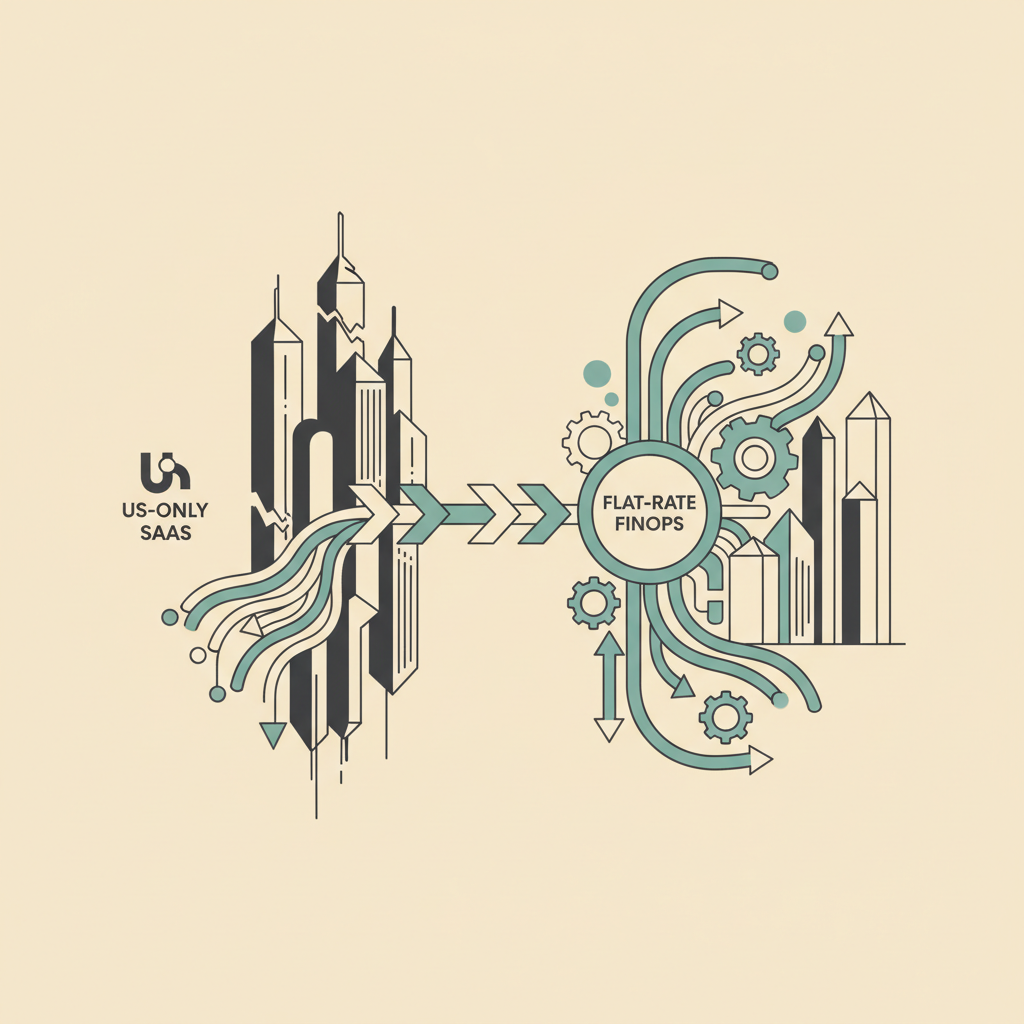
Mid-market SaaS companies face a unique challenge: they've outgrown basic cloud cost visibility tools but aren't yet ready for the six-figure enterprise FinOps platforms that come with opaque sales-gated contracts and percentage-of-spend pricing. They need sophisticated multi-cloud cost management, robust unit economics, and actionable savings, but without the 'cloud tax' that erodes their hard-won gross margins.
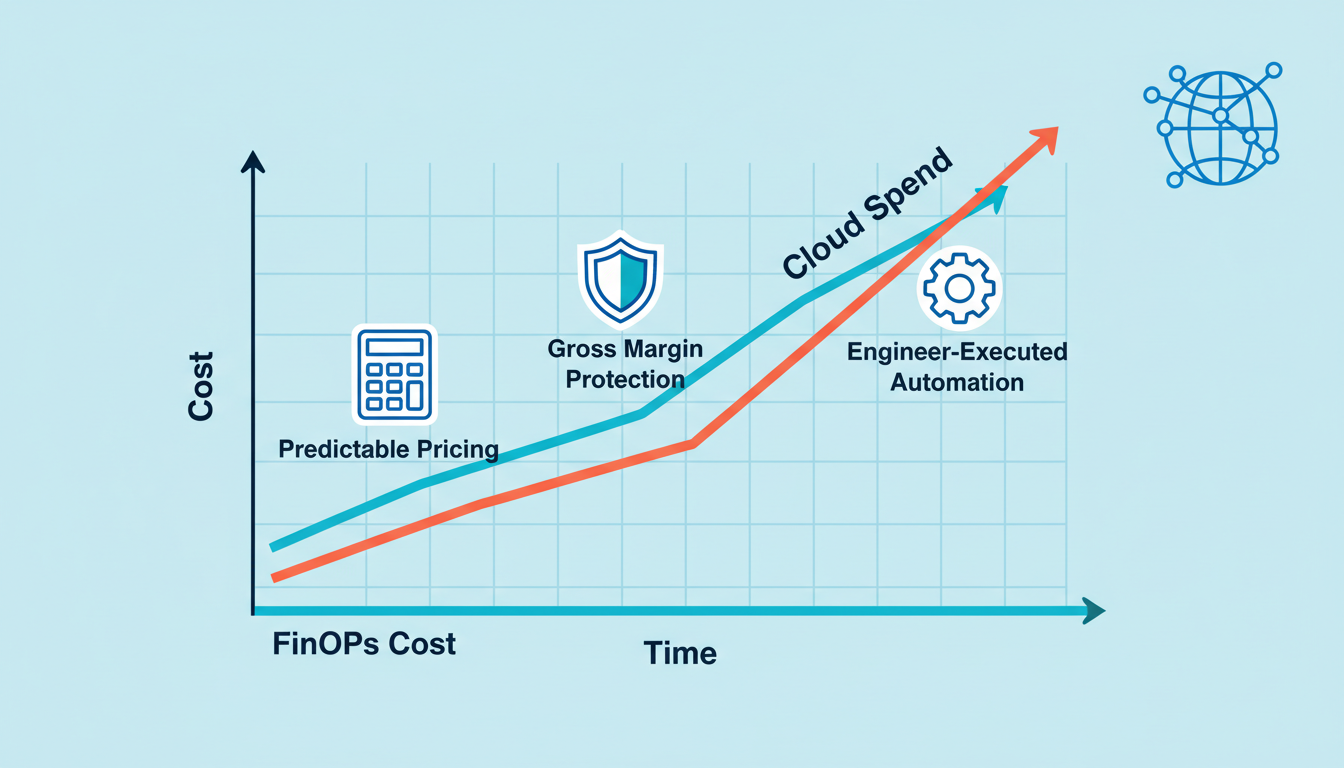
This is where the choice of a FinOps platform becomes critical. Many legacy and even some modern FinOps tools penalize growth by charging a percentage of your total cloud spend (often 1-3%) or taking a cut of your savings. For a growing SaaS company with a £50,000/month cloud bill, a 1% fee means £500/month in pure overhead, directly impacting profitability. As cloud spend scales, so does the FinOps bill, creating an inverse incentive that punishes success.
CostGlass offers a fundamentally different model, designed specifically for mid-market SaaS: transparent, flat-rate pricing tiers that never take a percentage of your cloud spend or savings. This allows companies to keep 100% of every dollar saved and ensures predictable FinOps costs as they scale from £5,000/month to £100,000/month and beyond.
The Mid-Market SaaS FinOps Dilemma: Growth vs. Gross Margin Erosion
SaaS businesses thrive on predictable revenue and healthy gross margins. Cloud infrastructure, while enabling rapid innovation and global reach, represents a significant and often volatile portion of the Cost of Goods Sold (COGS). Uncontrolled cloud spend can quickly turn a profitable product into a loss leader.
Here's why traditional FinOps models often fail mid-market SaaS:
- Percentage-of-Spend Pricing: Most enterprise FinOps vendors (e.g., CloudZero, Cloudability, Finout) charge a percentage of your total cloud spend. As your product grows and consumes more cloud resources, your FinOps bill automatically increases, creating a direct drag on gross margins. This is a "cloud tax" on your growth.
- Opaque Annual Contracts: Many platforms force annual-only contracts with sales-gated pricing, making it difficult for mid-market companies to budget and evaluate ROI without significant upfront commitment.
- Software-Only Recommendations: You get a dashboard full of recommendations, but busy engineering teams often lack the time or expertise to implement them. The result is a backlog of potential savings that never materialize, making the FinOps tool just another expensive monitoring solution.
- Lack of Unified Unit Economics: Without a clear, unified view of cost per customer, feature, or API call across AWS, Azure, GCP, Kubernetes, and AI services, it's impossible to make informed product pricing and engineering decisions.
Why CostGlass's Flat-Rate Model is a Game-Changer for SaaS Gross Margins
CostGlass is engineered from the ground up to solve these challenges for mid-market SaaS, offering a transparent, flat-rate pricing model that aligns with your growth ambitions, not against them. Instead of a percentage of your cloud bill, you pay a predictable monthly fee:
| CostGlass Tier | Monthly Price (USD/GBP) | Cloud Spend Cap (GBP/month) | Key Benefits for SaaS | Included Engineer Hours |
|---|---|---|---|---|
| Free | $0 / £0 | Up to £5,000 | Basic multi-cloud visibility, anomaly detection | 0 hrs |
| Starter | $99 / £99 | Up to £15,000 | Multi-cloud, K8s, AI, 6-hour refresh, virtual tagging | 0 hrs |
| Growth | $499 / £499 | Up to £50,000 | Unit economics, scheduling, commitments, custom reports | 0 hrs |
| Scale | $1,499 / £1,499 | Up to £100,000 | All features, plus dedicated engineer execution | 8 hrs/month |
| Enterprise | Custom | > £100,000 | Custom SLA, BYOC, dedicated engineer | Custom |
This model means:
- Zero "Cloud Tax": As your cloud spend grows from £15k to £50k to £100k, your FinOps software cost remains fixed at $499/month or $1499/month. You keep 100% of every dollar saved from rightsizing, scheduling, and commitment purchases. This directly protects and improves your gross margins.
- Predictable Budgeting: CFOs love predictable costs. CostGlass's flat fees make budgeting for FinOps simple, eliminating the variable and often escalating costs associated with percentage-based models.
- Faster Time-to-Savings with Engineer Execution: The Scale plan isn't just software; it includes 8 dedicated senior DevOps/FinOps engineer-hours every month. This is a game-changer for mid-market SaaS. Instead of recommendations sitting in Jira, CostGlass engineers will write the Terraform, rightsize instances, configure schedules, and execute approved optimizations. This accelerates your time-to-savings from months to days, delivering the ROI of a $180k+/year FinOps hire for a fraction of the cost.
The Cost of Building FinOps In-House for Mid-Market SaaS
Many mid-market SaaS companies initially attempt to build their own FinOps solutions. This often involves:
- Hiring dedicated FinOps engineers: A single experienced FinOps engineer can cost upwards of $150,000 - $200,000 per year, plus benefits. This is a significant fixed cost for a growing company.
- Developing custom ETL pipelines: Aggregating and normalizing billing data from AWS CUR, Azure MCA, GCP BigQuery, OpenCost, and AI APIs into a unified ledger is a continuous, complex engineering challenge. Cloud providers frequently change their billing schemas, requiring constant maintenance.
- Building internal dashboards and reporting: Developing and maintaining robust dashboards, alerts, and executive reports that can handle multi-cloud data and unit economics is a non-trivial effort, diverting valuable product engineering resources.
- Fragile Solutions: In-house systems often break due to API changes, schema updates, or lack of ongoing maintenance, leading to data inaccuracies and a loss of trust.
Consider a mid-market SaaS company that spends 6 months and $100,000 in engineering time attempting to build an in-house FinOps solution. This investment not only delays time-to-market for revenue-generating features but also results in a fragile system that requires continuous maintenance. CostGlass, in contrast, connects in 5 minutes via read-only IAM roles, provides 13 native multi-cloud connectors, refreshes every 6 hours, and comes with embedded engineers for a fraction of the cost, delivering immediate, measurable savings.
Core CostGlass Capabilities for Mid-Market SaaS
Beyond transparent pricing and engineer execution, CostGlass provides the critical features mid-market SaaS needs to protect gross margins and scale efficiently:
1. Board-Ready Unit Economics & COGS Protection
CFOs and CEOs need to understand the true cost per customer, cost per API request, or cost per 1,000 AI tokens. CostGlass's Unit Economics and Virtual Tagging capabilities unify 100% of cloud, Kubernetes, data warehouse, observability, and LLM spend into audit-ready showback/chargeback matrices. This ensures you can accurately attribute shared infrastructure costs and protect your SaaS gross margins.
2. Multi-Cloud, Kubernetes & AI Cost Visibility
Mid-market SaaS increasingly operates across multiple clouds and leverages Kubernetes and AI. CostGlass provides a single pane of glass, unifying all 13 native connectors (AWS, Azure, GCP, OCI, Alibaba, DigitalOcean, Linode, Cloudflare, Kubernetes OpenCost, OpenAI, Anthropic, Snowflake, Datadog) into a normalized ledger, updated every 6 hours. This eliminates data silos and provides a complete financial picture.
3. Automated Instance Scheduling & Rightsizing
Development and staging environments are prime candidates for massive savings. CostGlass's Multi-Cloud Instance Scheduler automates off-hours start/stop for VMs, autoscaling groups, and databases across all major clouds. Coupled with Measured Rightsizing based on p95 utilization, these features can cut non-production compute bills by 65% or more.
4. Sovereign Data Residency & Private BYOC Deployment
For SaaS companies serving regulated industries, data residency is paramount. CostGlass allows you to pin your billing telemetry to isolated regional cells in the UK (eu-west-2), EU (eu-central-1), US (us-east-1), or APAC (ap-southeast-1). For the most stringent compliance needs, the entire CostGlass stack can be deployed privately inside your own AWS account and VPC (BYOC), ensuring zero financial data ever leaves your cloud boundary.
How to Configure & Automate This in CostGlass
Getting started with CostGlass to protect your SaaS gross margins is straightforward:
- Connect Your Cloud Accounts: Begin by connecting your AWS, Azure, GCP, and other cloud providers using our secure, read-only IAM roles. Our connection overview guides you through the 5-minute setup.
- Implement Virtual Tagging for Unit Economics: Navigate to
Virtual Taggingin the CostGlass console. Use the AI Virtual Tag Rule Builder to define rules that map shared costs to your business dimensions (e.g.,VTAG:Customer,VTAG:Feature). This allows you to allocate untagged spend retroactively. - Set Up Multi-Cloud Instance Schedules: Go to
Instance Schedulerand createNamed Schedule Templatesfor your development and staging environments. Apply these schedules using tag policies (e.g.,cg-schedule:dev-off-hours) to automatically stop and start non-production resources, slashing compute costs. - Monitor & Optimize with Engineer Support: Review your Cost Explorer for insights. On the Scale plan, collaborate with your dedicated CostGlass FinOps engineer to prioritize and execute the most impactful savings recommendations directly.
Frequently Asked Questions
Q: How does CostGlass's pricing compare to percentage-of-spend models for a mid-market SaaS company?
CostGlass's flat-rate pricing means your FinOps costs remain predictable as your cloud spend grows. For example, a company spending £50,000/month on cloud could pay £500/month (1%) to a percentage-of-spend vendor. With CostGlass Growth, they pay £499/month, and this cost doesn't increase even if their cloud spend doubles to £100,000/month. This saves them thousands annually and protects gross margins.
Q: Can CostGlass help attribute Kubernetes costs to specific teams or features within my SaaS product?
Absolutely. CostGlass integrates with the lightweight OpenCost exporter to provide granular cost allocation per cluster, node pool, namespace, deployment, and pod. Combined with Virtual Tagging, you can precisely map these Kubernetes costs to internal teams, product features, or even individual customers, enabling accurate showback/chargeback and unit economics.
Q: My SaaS company needs to ensure data residency for compliance. How does CostGlass address this?
CostGlass provides sovereign data residency cells in the UK, EU, US, and APAC. You select your preferred region at sign-up, ensuring your billing telemetry never leaves that geographic boundary. For the strictest requirements, our Enterprise plan offers a private Bring Your Own Cloud (BYOC) deployment, installing the entire CostGlass stack within your own AWS account and VPC, giving you complete data sovereignty and control.
Ready to protect your SaaS gross margins and gain predictable cloud cost control? Explore CostGlass pricing to see how our flat-rate tiers and engineer-executed savings can transform your FinOps, or dive deeper into our Unit Economics documentation to start calculating true cost per customer today.
Las empresas SaaS de mercado medio se enfrentan a un desafío único: han superado las herramientas básicas de visibilidad de costos en la nube, pero aún no están listas para las plataformas FinOps empresariales de seis cifras que vienen con contratos opacos con acceso restringido por ventas y precios basados en un porcentaje del gasto. Necesitan una gestión sofisticada de costos multinube, una economía unitaria robusta y ahorros accionables, pero sin el 'impuesto de la nube' que erosiona sus márgenes brutos tan duramente ganados.
Aquí es donde la elección de una plataforma FinOps se vuelve crítica. Muchas herramientas FinOps heredadas e incluso algunas modernas penalizan el crecimiento al cobrar un porcentaje de su gasto total en la nube (a menudo del 1 al 3%) o al llevarse una parte de sus ahorros. Para una empresa SaaS en crecimiento con una factura de nube de £50,000/mes, una tarifa del 1% significa £500/mes en gastos generales puros, lo que impacta directamente en la rentabilidad. A medida que el gasto en la nube escala, también lo hace la factura de FinOps, creando un incentivo inverso que castiga el éxito.
CostGlass ofrece un modelo fundamentalmente diferente, diseñado específicamente para SaaS de mercado medio: niveles de precios transparentes y de tarifa plana que nunca toman un porcentaje de su gasto en la nube o de sus ahorros. Esto permite a las empresas conservar el 100% de cada dólar ahorrado y garantiza costos de FinOps predecibles a medida que escalan de £5,000/mes a £100,000/mes y más allá.
El Dilema FinOps de SaaS de Mercado Medio: Crecimiento vs. Erosión del Margen Bruto
Las empresas SaaS prosperan con ingresos predecibles y márgenes brutos saludables. La infraestructura en la nube, si bien permite una rápida innovación y un alcance global, representa una porción significativa y a menudo volátil del Costo de Bienes Vendidos (COGS). Un gasto en la nube descontrolado puede convertir rápidamente un producto rentable en un producto de pérdida.
Aquí se explica por qué los modelos FinOps tradicionales a menudo fallan en el SaaS de mercado medio:
- Precios Basados en un Porcentaje del Gasto: La mayoría de los proveedores de FinOps empresariales (por ejemplo, CloudZero, Cloudability, Finout) cobran un porcentaje de su gasto total en la nube. A medida que su producto crece y consume más recursos en la nube, su factura de FinOps aumenta automáticamente, creando un lastre directo para los márgenes brutos. Esto es un "impuesto de la nube" sobre su crecimiento.
- Contratos Anuales Opacos: Muchas plataformas imponen contratos solo anuales con precios restringidos por ventas, lo que dificulta que las empresas de mercado medio presupuesten y evalúen el ROI sin un compromiso inicial significativo.
- Recomendaciones Solo de Software: Obtiene un panel lleno de recomendaciones, pero los equipos de ingeniería ocupados a menudo carecen del tiempo o la experiencia para implementarlas. El resultado es una acumulación de posibles ahorros que nunca se materializan, lo que convierte a la herramienta FinOps en otra solución de monitoreo costosa.
- Falta de Economía Unitaria Unificada: Sin una visión clara y unificada del costo por cliente, característica o llamada API en AWS, Azure, GCP, Kubernetes y servicios de IA, es imposible tomar decisiones informadas sobre precios de productos e ingeniería.
Por qué el Modelo de Tarifa Plana de CostGlass Cambia las Reglas del Juego para los Márgenes Brutos de SaaS
CostGlass está diseñado desde cero para resolver estos desafíos para el SaaS de mercado medio, ofreciendo un modelo de precios transparente y de tarifa plana que se alinea con sus ambiciones de crecimiento, no en su contra. En lugar de un porcentaje de su factura de la nube, paga una tarifa mensual predecible:
| Nivel de CostGlass | Precio Mensual (USD/GBP) | Límite de Gasto en la Nube (GBP/mes) | Beneficios Clave para SaaS | Horas de Ingeniero Incluidas |
|---|---|---|---|---|
| Gratis | $0 / £0 | Hasta £5,000 | Visibilidad multinube básica, detección de anomalías | 0 hrs |
| Starter | $99 / £99 | Hasta £15,000 | Multinube, K8s, IA, actualización cada 6 horas, etiquetado virtual | 0 hrs |
| Growth | $499 / £499 | Hasta £50,000 | Economía unitaria, programación, compromisos, informes personalizados | 0 hrs |
| Scale | $1,499 / £1,499 | Hasta £100,000 | Todas las funciones, más ejecución dedicada por ingeniero | 8 hrs/mes |
| Enterprise | Personalizado | > £100,000 | SLA personalizado, BYOC, ingeniero dedicado | Personalizado |
Este modelo significa:
- Cero "Impuesto de la Nube": A medida que su gasto en la nube crece de £15k a £50k a £100k, el costo de su software FinOps se mantiene fijo en $499/mes o $1499/mes. Usted conserva el 100% de cada dólar ahorrado por el dimensionamiento correcto, la programación y las compras de compromisos. Esto protege y mejora directamente sus márgenes brutos.
- Presupuesto Predecible: A los CFOs les encantan los costos predecibles. Las tarifas planas de CostGlass simplifican la elaboración de presupuestos para FinOps, eliminando los costos variables y a menudo crecientes asociados con los modelos basados en porcentajes.
- Tiempo de Ahorro Más Rápido con Ejecución de Ingenieros: El plan Scale no es solo software; incluye 8 horas dedicadas de ingenieros senior de DevOps/FinOps cada mes. Esto cambia las reglas del juego para el SaaS de mercado medio. En lugar de recomendaciones que se quedan en Jira, los ingenieros de CostGlass escribirán el Terraform, dimensionarán correctamente las instancias, configurarán los horarios y ejecutarán las optimizaciones aprobadas. Esto acelera su tiempo de ahorro de meses a días, entregando el ROI de una contratación de FinOps de más de $180k/año por una fracción del costo.
El Costo de Construir FinOps Internamente para SaaS de Mercado Medio
Muchas empresas SaaS de mercado medio intentan inicialmente construir sus propias soluciones FinOps. Esto a menudo implica:
- Contratar ingenieros FinOps dedicados: Un solo ingeniero FinOps experimentado puede costar más de $150,000 - $200,000 por año, más beneficios. Este es un costo fijo significativo para una empresa en crecimiento.
- Desarrollar pipelines ETL personalizados: Agrupar y normalizar los datos de facturación de AWS CUR, Azure MCA, GCP BigQuery, OpenCost y las API de IA en un libro mayor unificado es un desafío de ingeniería continuo y complejo. Los proveedores de la nube cambian con frecuencia sus esquemas de facturación, lo que requiere un mantenimiento constante.
- Construir paneles e informes internos: Desarrollar y mantener paneles, alertas e informes ejecutivos robustos que puedan manejar datos multinube y economía unitaria es un esfuerzo no trivial, que desvía valiosos recursos de ingeniería de productos.
- Soluciones Frágiles: Los sistemas internos a menudo fallan debido a cambios en la API, actualizaciones de esquemas o falta de mantenimiento continuo, lo que lleva a imprecisiones en los datos y una pérdida de confianza.
Considere una empresa SaaS de mercado medio que gasta 6 meses y $100,000 en tiempo de ingeniería intentando construir una solución FinOps interna. Esta inversión no solo retrasa el tiempo de comercialización de funciones generadoras de ingresos, sino que también da como resultado un sistema frágil que requiere un mantenimiento continuo. CostGlass, por el contrario, se conecta en 5 minutos a través de roles IAM de solo lectura, proporciona 13 conectores multinube nativos, se actualiza cada 6 horas y viene con ingenieros integrados por una fracción del costo, lo que genera ahorros inmediatos y medibles.
Capacidades Clave de CostGlass para SaaS de Mercado Medio
Más allá de los precios transparentes y la ejecución de ingenieros, CostGlass proporciona las características críticas que el SaaS de mercado medio necesita para proteger los márgenes brutos y escalar de manera eficiente:
1. Economía Unitaria Lista para la Junta y Protección de COGS
Los CFOs y CEOs necesitan comprender el costo real por cliente, el costo por solicitud de API o el costo por 1,000 tokens de IA. Las capacidades de Economía Unitaria y Etiquetado Virtual de CostGlass unifican el 100% del gasto en la nube, Kubernetes, almacenamiento de datos, observabilidad y LLM en matrices de showback/chargeback listas para auditorías. Esto garantiza que pueda atribuir con precisión los costos de infraestructura compartida y proteger sus márgenes brutos de SaaS.
2. Visibilidad de Costos Multinube, Kubernetes e IA
El SaaS de mercado medio opera cada vez más en múltiples nubes y aprovecha Kubernetes e IA. CostGlass proporciona un único panel de vidrio, unificando los 13 conectores nativos (AWS, Azure, GCP, OCI, Alibaba, DigitalOcean, Linode, Cloudflare, Kubernetes OpenCost, OpenAI, Anthropic, Snowflake, Datadog) en un libro mayor normalizado, actualizado cada 6 horas. Esto elimina los silos de datos y proporciona una imagen financiera completa.
3. Programación y Dimensionamiento Automático de Instancias
Los entornos de desarrollo y staging son candidatos principales para ahorros masivos. El Programador de Instancias Multinube de CostGlass automatiza el inicio/parada fuera de horario para máquinas virtuales, grupos de autoescalado y bases de datos en todas las principales nubes. Junto con el Dimensionamiento Medido basado en la utilización p95, estas características pueden reducir las facturas de cómputo no productivo en un 65% o más.
4. Residencia de Datos Soberana e Implementación BYOC Privada
Para las empresas SaaS que prestan servicios a industrias reguladas, la residencia de datos es primordial. CostGlass le permite fijar su telemetría de facturación a celdas regionales aisladas en el Reino Unido (eu-west-2), la UE (eu-central-1), los EE. UU. (us-east-1) o APAC (ap-southeast-1). Para las necesidades de cumplimiento más estrictas, toda la pila de CostGlass se puede implementar privadamente dentro de su propia cuenta de AWS y VPC (BYOC), lo que garantiza que ningún dato financiero salga de su límite de la nube.
Cómo Configurar y Automatizar Esto en CostGlass
Comenzar con CostGlass para proteger sus márgenes brutos de SaaS es sencillo:
- Conecte sus Cuentas en la Nube: Comience conectando sus proveedores de AWS, Azure, GCP y otras nubes utilizando nuestros roles IAM seguros de solo lectura. Nuestra descripción general de la conexión lo guía a través de la configuración de 5 minutos.
- Implemente el Etiquetado Virtual para la Economía Unitaria: Navegue a
Virtual Taggingen la consola de CostGlass. Utilice el Creador de Reglas de Etiquetado Virtual de IA para definir reglas que asignen costos compartidos a sus dimensiones comerciales (por ejemplo,VTAG:Customer,VTAG:Feature). Esto le permite asignar el gasto sin etiquetar de forma retroactiva. - Configure Horarios de Instancias Multinube: Vaya a
Instance Schedulery creeNamed Schedule Templatespara sus entornos de desarrollo y staging. Aplique estos horarios utilizando políticas de etiquetas (por ejemplo,cg-schedule:dev-off-hours) para detener e iniciar automáticamente los recursos no productivos, reduciendo drásticamente los costos de cómputo. - Monitoree y Optimice con Soporte de Ingenieros: Revise su Explorador de Costos para obtener información. En el plan Scale, colabore con su ingeniero FinOps dedicado de CostGlass para priorizar y ejecutar directamente las recomendaciones de ahorro más impactantes.
Preguntas Frecuentes
P: ¿Cómo se compara el precio de CostGlass con los modelos de porcentaje del gasto para una empresa SaaS de mercado medio?
El precio de tarifa plana de CostGlass significa que sus costos de FinOps se mantienen predecibles a medida que crece su gasto en la nube. Por ejemplo, una empresa que gasta £50,000/mes en la nube podría pagar £500/mes (1%) a un proveedor basado en porcentaje del gasto. Con CostGlass Growth, pagan £499/mes, y este costo no aumenta incluso si su gasto en la nube se duplica a £100,000/mes. Esto les ahorra miles anualmente y protege los márgenes brutos.
P: ¿Puede CostGlass ayudar a atribuir los costos de Kubernetes a equipos o características específicas dentro de mi producto SaaS?
Absolutamente. CostGlass se integra con el exportador ligero OpenCost para proporcionar una asignación granular de costos por clúster, grupo de nodos, espacio de nombres, implementación y pod. Combinado con el Etiquetado Virtual, puede mapear con precisión estos costos de Kubernetes a equipos internos, características del producto o incluso clientes individuales, lo que permite una asignación precisa de costos (showback/chargeback) y economía unitaria.
P: Mi empresa SaaS necesita garantizar la residencia de datos para el cumplimiento. ¿Cómo aborda CostGlass esto?
CostGlass proporciona celdas de residencia de datos soberanas en el Reino Unido, la UE, los EE. UU. y APAC. Usted selecciona su región preferida al registrarse, asegurando que su telemetría de facturación nunca abandone ese límite geográfico. Para los requisitos más estrictos, nuestro plan Enterprise ofrece una implementación privada de Bring Your Own Cloud (BYOC), instalando toda la pila de CostGlass dentro de su propia cuenta de AWS y VPC, lo que le brinda soberanía y control total sobre los datos.
¿Listo para proteger sus márgenes brutos de SaaS y obtener un control predecible de los costos de la nube? Explore los precios de CostGlass para ver cómo nuestros niveles de tarifa plana y los ahorros ejecutados por ingenieros pueden transformar su FinOps, o profundice en nuestra documentación de Economía Unitaria para comenzar a calcular el costo real por cliente hoy mismo.
SaaS-Unternehmen im Mittelstand stehen vor einer einzigartigen Herausforderung: Sie sind über grundlegende Tools zur Cloud-Kosten-Transparenz hinausgewachsen, sind aber noch nicht bereit für die sechsstelligen FinOps-Plattformen für Unternehmen, die mit undurchsichtigen, vertriebsgesteuerten Verträgen und prozentualer Preisgestaltung einhergehen. Sie benötigen ein ausgeklügeltes Multi-Cloud-Kostenmanagement, robuste Unit Economics und umsetzbare Einsparungen, aber ohne die „Cloud-Steuer“, die ihre hart erkämpften Bruttomargen schmälert.
Hier wird die Wahl einer FinOps-Plattform entscheidend. Viele ältere und sogar einige moderne FinOps-Tools bestrafen Wachstum, indem sie einen Prozentsatz Ihrer gesamten Cloud-Ausgaben (oft 1-3 %) berechnen oder einen Anteil an Ihren Einsparungen nehmen. Für ein wachsendes SaaS-Unternehmen mit einer Cloud-Rechnung von 50.000 £/Monat bedeuten 1 % Gebühren 500 £/Monat reine Gemeinkosten, was sich direkt auf die Rentabilität auswirkt. Wenn die Cloud-Ausgaben steigen, steigen auch die FinOps-Kosten, was einen inversen Anreiz schafft, der den Erfolg bestraft.
CostGlass bietet ein grundlegend anderes Modell, das speziell für SaaS im Mittelstand entwickelt wurde: transparente Pauschalpreise, die niemals einen Prozentsatz Ihrer Cloud-Ausgaben oder Einsparungen berechnen. Dies ermöglicht es Unternehmen, 100 % jedes gesparten Dollars zu behalten und sorgt für vorhersehbare FinOps-Kosten, während sie von 5.000 £/Monat auf 100.000 £/Monat und darüber hinaus skalieren.
Das FinOps-Dilemma von SaaS im Mittelstand: Wachstum vs. Erosion der Bruttomarge
SaaS-Unternehmen leben von vorhersehbaren Einnahmen und gesunden Bruttomargen. Die Cloud-Infrastruktur, die schnelle Innovation und globale Reichweite ermöglicht, stellt jedoch einen erheblichen und oft volatilen Teil der Herstellungskosten (COGS) dar. Unkontrollierte Cloud-Ausgaben können ein profitables Produkt schnell zu einem Verlustbringer machen.
Hier sind die Gründe, warum traditionelle FinOps-Modelle oft bei SaaS im Mittelstand scheitern:
- Prozentuale Preisgestaltung nach Ausgaben: Die meisten FinOps-Anbieter für Unternehmen (z. B. CloudZero, Cloudability, Finout) berechnen einen Prozentsatz Ihrer gesamten Cloud-Ausgaben. Wenn Ihr Produkt wächst und mehr Cloud-Ressourcen verbraucht, steigen Ihre FinOps-Kosten automatisch, was die Bruttomargen direkt belastet. Dies ist eine „Cloud-Steuer“ auf Ihr Wachstum.
- Undurchsichtige Jahresverträge: Viele Plattformen erzwingen ausschließlich Jahresverträge mit vertriebsgesteuerten Preisen, was es mittelständischen Unternehmen erschwert, Budgets zu erstellen und den ROI ohne erhebliche Vorabinvestitionen zu bewerten.
- Nur-Software-Empfehlungen: Sie erhalten ein Dashboard voller Empfehlungen, aber vielbeschäftigten Ingenieurteams fehlt oft die Zeit oder das Fachwissen, um diese umzusetzen. Das Ergebnis ist ein Rückstand potenzieller Einsparungen, die nie realisiert werden, was das FinOps-Tool zu einer weiteren teuren Überwachungslösung macht.
- Mangel an einheitlichen Unit Economics: Ohne eine klare, einheitliche Sicht auf die Kosten pro Kunde, Funktion oder API-Aufruf über AWS, Azure, GCP, Kubernetes und KI-Dienste hinweg ist es unmöglich, fundierte Produktpreis- und Engineering-Entscheidungen zu treffen.
Warum das Pauschalmodell von CostGlass ein Game-Changer für die Bruttomargen von SaaS ist
CostGlass wurde von Grund auf entwickelt, um diese Herausforderungen für SaaS im Mittelstand zu lösen, und bietet ein transparentes Pauschalpreismodell, das auf Ihre Wachstumsambitionen abgestimmt ist und nicht gegen sie arbeitet. Anstelle eines Prozentsatzes Ihrer Cloud-Rechnung zahlen Sie eine vorhersehbare monatliche Gebühr:
| CostGlass Tier | Monthly Price (USD/GBP) | Cloud Spend Cap (GBP/month) | Key Benefits for SaaS | Included Engineer Hours |
|---|---|---|---|---|
| Free | $0 / £0 | Up to £5,000 | Basic multi-cloud visibility, anomaly detection | 0 hrs |
| Starter | $99 / £99 | Up to £15,000 | Multi-cloud, K8s, AI, 6-hour refresh, virtual tagging | 0 hrs |
| Growth | $499 / £499 | Up to £50,000 | Unit economics, scheduling, commitments, custom reports | 0 hrs |
| Scale | $1,499 / £1,499 | Up to £100,000 | All features, plus dedicated engineer execution | 8 hrs/month |
| Enterprise | Custom | > £100,000 | Custom SLA, BYOC, dedicated engineer | Custom |
Dieses Modell bedeutet:
- Keine „Cloud-Steuer“: Wenn Ihre Cloud-Ausgaben von 15.000 £ auf 50.000 £ auf 100.000 £ steigen, bleiben Ihre FinOps-Softwarekosten bei 499 $/Monat oder 1499 $/Monat fest. Sie behalten 100 % jedes gesparten Dollars aus Rightsizing, Scheduling und Commitment-Käufen. Dies schützt und verbessert direkt Ihre Bruttomargen.
- Vorhersehbare Budgetierung: CFOs lieben vorhersehbare Kosten. Die Pauschalgebühren von CostGlass vereinfachen die Budgetierung für FinOps und eliminieren die variablen und oft steigenden Kosten, die mit prozentualen Modellen verbunden sind.
- Schnellere Amortisation durch Ingenieur-Ausführung: Der Scale-Plan ist nicht nur Software; er beinhaltet 8 dedizierte Senior DevOps/FinOps-Ingenieurstunden jeden Monat. Dies ist ein Game-Changer für SaaS im Mittelstand. Anstatt dass Empfehlungen in Jira liegen bleiben, schreiben CostGlass-Ingenieure den Terraform-Code, passen Instanzen an, konfigurieren Zeitpläne und führen genehmigte Optimierungen aus. Dies beschleunigt Ihre Amortisation von Monaten auf Tage und liefert den ROI einer FinOps-Einstellung von über 180.000 $/Jahr zu einem Bruchteil der Kosten.
Die Kosten für den Aufbau von Inhouse-FinOps für SaaS im Mittelstand
Viele SaaS-Unternehmen im Mittelstand versuchen zunächst, ihre eigenen FinOps-Lösungen aufzubauen. Dies beinhaltet oft:
- Einstellung dedizierter FinOps-Ingenieure: Ein einzelner erfahrener FinOps-Ingenieur kann über 150.000 bis 200.000 US-Dollar pro Jahr kosten, zuzüglich Sozialleistungen. Dies ist eine erhebliche Fixkosten für ein wachsendes Unternehmen.
- Entwicklung benutzerdefinierter ETL-Pipelines: Das Aggregieren und Normalisieren von Abrechnungsdaten aus AWS CUR, Azure MCA, GCP BigQuery, OpenCost und KI-APIs in ein einheitliches Ledger ist eine kontinuierliche, komplexe technische Herausforderung. Cloud-Anbieter ändern häufig ihre Abrechnungsschemata, was eine ständige Wartung erfordert.
- Aufbau interner Dashboards und Berichte: Die Entwicklung und Wartung robuster Dashboards, Warnungen und Executive Reports, die Multi-Cloud-Daten und Unit Economics verarbeiten können, ist ein nicht trivialer Aufwand, der wertvolle Produktentwicklungsressourcen ablenkt.
- Fragile Lösungen: Inhouse-Systeme fallen oft aufgrund von API-Änderungen, Schema-Updates oder mangelnder fortlaufender Wartung aus, was zu Datenungenauigkeiten und Vertrauensverlust führt.
Betrachten Sie ein SaaS-Unternehmen im Mittelstand, das 6 Monate und 100.000 US-Dollar an Ingenieurzeit aufwendet, um eine Inhouse-FinOps-Lösung aufzubauen. Diese Investition verzögert nicht nur die Markteinführung umsatzgenerierender Funktionen, sondern führt auch zu einem fragilen System, das kontinuierliche Wartung erfordert. CostGlass hingegen verbindet sich in 5 Minuten über schreibgeschützte IAM-Rollen, bietet 13 native Multi-Cloud-Konnektoren, aktualisiert alle 6 Stunden und wird mit eingebetteten Ingenieuren zu einem Bruchteil der Kosten geliefert, was sofortige, messbare Einsparungen ermöglicht.
Kernfunktionen von CostGlass für SaaS im Mittelstand
Neben transparenter Preisgestaltung und Ingenieur-Ausführung bietet CostGlass die kritischen Funktionen, die SaaS im Mittelstand benötigt, um Bruttomargen zu schützen und effizient zu skalieren:
1. Board-fähige Unit Economics & COGS-Schutz
CFOs und CEOs müssen die wahren Kosten pro Kunde, Kosten pro API-Anfrage oder Kosten pro 1.000 KI-Tokens verstehen. Die Unit Economics und Virtual Tagging-Funktionen von CostGlass vereinheitlichen 100 % der Cloud-, Kubernetes-, Data Warehouse-, Observability- und LLM-Ausgaben in auditfähige Showback/Chargeback-Matrizen. Dies stellt sicher, dass Sie gemeinsame Infrastrukturkosten genau zuordnen und Ihre SaaS-Bruttomargen schützen können.
2. Multi-Cloud-, Kubernetes- & KI-Kosten-Transparenz
SaaS im Mittelstand arbeitet zunehmend über mehrere Clouds hinweg und nutzt Kubernetes und KI. CostGlass bietet eine einzige Oberfläche, die alle 13 nativen Konnektoren (AWS, Azure, GCP, OCI, Alibaba, DigitalOcean, Linode, Cloudflare, Kubernetes OpenCost, OpenAI, Anthropic, Snowflake, Datadog) in einem normalisierten Ledger vereint, das alle 6 Stunden aktualisiert wird. Dies eliminiert Datensilos und bietet ein vollständiges Finanzbild.
3. Automatisierte Instanzplanung & Rightsizing
Entwicklungs- und Staging-Umgebungen sind hervorragende Kandidaten für massive Einsparungen. Der Multi-Cloud Instance Scheduler von CostGlass automatisiert das Starten/Stoppen von VMs, Autoscaling-Gruppen und Datenbanken außerhalb der Geschäftszeiten in allen wichtigen Clouds. Gepaart mit Measured Rightsizing basierend auf der p95-Auslastung können diese Funktionen die Kosten für nicht-produktive Rechenressourcen um 65 % oder mehr senken.
4. Souveräne Datenresidenz & Private BYOC-Bereitstellung
Für SaaS-Unternehmen, die regulierte Branchen bedienen, ist die Datenresidenz von größter Bedeutung. CostGlass ermöglicht es Ihnen, Ihre Abrechnungstelemetrie an isolierte regionale Zellen in Großbritannien (eu-west-2), der EU (eu-central-1), den USA (us-east-1) oder APAC (ap-southeast-1) zu binden. Für die strengsten Compliance-Anforderungen kann der gesamte CostGlass-Stack privat in Ihrem eigenen AWS-Konto und VPC (BYOC) bereitgestellt werden, wodurch sichergestellt wird, dass keine Finanzdaten Ihre Cloud-Grenzen verlassen.
So konfigurieren und automatisieren Sie dies in CostGlass
Der Einstieg in CostGlass zum Schutz Ihrer SaaS-Bruttomargen ist unkompliziert:
- Verbinden Sie Ihre Cloud-Konten: Beginnen Sie mit der Verbindung Ihrer AWS-, Azure-, GCP- und anderer Cloud-Anbieter mithilfe unserer sicheren, schreibgeschützten IAM-Rollen. Unsere Verbindungsübersicht führt Sie durch die 5-minütige Einrichtung.
- Implementieren Sie Virtual Tagging für Unit Economics: Navigieren Sie in der CostGlass-Konsole zu
Virtual Tagging. Verwenden Sie den AI Virtual Tag Rule Builder, um Regeln zu definieren, die gemeinsame Kosten Ihren Geschäftsdimensionen zuordnen (z. B.VTAG:Customer,VTAG:Feature). Dies ermöglicht es Ihnen, nicht getaggte Ausgaben rückwirkend zuzuordnen. - Richten Sie Multi-Cloud-Instanzzeitpläne ein: Gehen Sie zu
Instance Schedulerund erstellen SieNamed Schedule Templatesfür Ihre Entwicklungs- und Staging-Umgebungen. Wenden Sie diese Zeitpläne mithilfe von Tag-Richtlinien an (z. B.cg-schedule:dev-off-hours), um nicht-produktive Ressourcen automatisch zu stoppen und zu starten und so die Rechenkosten drastisch zu senken. - Überwachen und optimieren Sie mit Ingenieur-Support: Überprüfen Sie Ihren Cost Explorer auf Erkenntnisse. Im Scale-Plan arbeiten Sie mit Ihrem dedizierten CostGlass FinOps-Ingenieur zusammen, um die wirkungsvollsten Einsparungsempfehlungen direkt zu priorisieren und umzusetzen.
Häufig gestellte Fragen
F: Wie vergleicht sich die Preisgestaltung von CostGlass mit prozentualen Modellen für ein SaaS-Unternehmen im Mittelstand?
Die Pauschalpreisgestaltung von CostGlass bedeutet, dass Ihre FinOps-Kosten vorhersehbar bleiben, während Ihre Cloud-Ausgaben wachsen. Zum Beispiel könnte ein Unternehmen, das 50.000 £/Monat für die Cloud ausgibt, 500 £/Monat (1 %) an einen Anbieter mit prozentualer Preisgestaltung zahlen. Mit CostGlass Growth zahlen sie 499 £/Monat, und diese Kosten steigen nicht, selbst wenn ihre Cloud-Ausgaben sich auf 100.000 £/Monat verdoppeln. Dies spart ihnen jährlich Tausende und schützt die Bruttomargen.
F: Kann CostGlass dabei helfen, Kubernetes-Kosten bestimmten Teams oder Funktionen innerhalb meines SaaS-Produkts zuzuordnen?
Absolut. CostGlass integriert sich mit dem leichtgewichtigen OpenCost-Exporter, um eine granulare Kostenverteilung pro Cluster, Node-Pool, Namespace, Deployment und Pod bereitzustellen. In Kombination mit Virtual Tagging können Sie diese Kubernetes-Kosten präzise internen Teams, Produktfunktionen oder sogar einzelnen Kunden zuordnen, was eine genaue Showback/Chargeback und Unit Economics ermöglicht.
F: Mein SaaS-Unternehmen muss aus Compliance-Gründen die Datenresidenz sicherstellen. Wie geht CostGlass damit um?
CostGlass bietet souveräne Datenresidenzzellen in Großbritannien, der EU, den USA und APAC. Sie wählen Ihre bevorzugte Region bei der Anmeldung aus, wodurch sichergestellt wird, dass Ihre Abrechnungstelemetrie niemals diese geografische Grenze verlässt. Für die strengsten Anforderungen bietet unser Enterprise-Plan eine private Bring Your Own Cloud (BYOC)-Bereitstellung, die den gesamten CostGlass-Stack in Ihrem eigenen AWS-Konto und VPC installiert und Ihnen vollständige Datensouveränität und Kontrolle bietet.
Bereit, Ihre SaaS-Bruttomargen zu schützen und eine vorhersehbare Cloud-Kostenkontrolle zu erlangen? Entdecken Sie die CostGlass-Preise, um zu sehen, wie unsere Pauschalpreise und von Ingenieuren umgesetzten Einsparungen Ihr FinOps transformieren können, oder tauchen Sie tiefer in unsere Unit Economics-Dokumentation ein, um noch heute die wahren Kosten pro Kunde zu berechnen.
Les entreprises SaaS de taille moyenne sont confrontées à un défi unique : elles ont dépassé les outils de visibilité des coûts cloud de base, mais ne sont pas encore prêtes pour les plateformes FinOps d'entreprise à six chiffres qui s'accompagnent de contrats opaques et de tarification basée sur un pourcentage des dépenses. Elles ont besoin d'une gestion sophistiquée des coûts multi-cloud, d'une économie unitaire robuste et d'économies actionnables, mais sans la "taxe cloud" qui érode leurs marges brutes durement gagnées.
C'est là que le choix d'une plateforme FinOps devient critique. De nombreux outils FinOps hérités et même certains modernes pénalisent la croissance en facturant un pourcentage de vos dépenses cloud totales (souvent 1 à 3 %) ou en prélevant une part de vos économies. Pour une entreprise SaaS en croissance avec une facture cloud de 50 000 £/mois, des frais de 1 % représentent 500 £/mois de frais généraux purs, impactant directement la rentabilité. À mesure que les dépenses cloud augmentent, la facture FinOps augmente également, créant une incitation inverse qui pénalise le succès.
CostGlass propose un modèle fondamentalement différent, conçu spécifiquement pour les SaaS de taille moyenne : des niveaux de prix transparents et forfaitaires qui ne prennent jamais un pourcentage de vos dépenses cloud ou de vos économies. Cela permet aux entreprises de conserver 100 % de chaque dollar économisé et garantit des coûts FinOps prévisibles à mesure qu'elles passent de 5 000 £/mois à 100 000 £/mois et au-delà.
Le dilemme FinOps des SaaS de taille moyenne : croissance vs érosion de la marge brute
Les entreprises SaaS prospèrent grâce à des revenus prévisibles et à des marges brutes saines. L'infrastructure cloud, tout en permettant une innovation rapide et une portée mondiale, représente une partie importante et souvent volatile du coût des marchandises vendues (COGS). Des dépenses cloud incontrôlées peuvent rapidement transformer un produit rentable en un produit d'appel.
Voici pourquoi les modèles FinOps traditionnels échouent souvent pour les SaaS de taille moyenne :
- Tarification basée sur un pourcentage des dépenses : La plupart des fournisseurs FinOps d'entreprise (par exemple, CloudZero, Cloudability, Finout) facturent un pourcentage de vos dépenses cloud totales. À mesure que votre produit se développe et consomme plus de ressources cloud, votre facture FinOps augmente automatiquement, ce qui pèse directement sur les marges brutes. C'est une "taxe cloud" sur votre croissance.
- Contrats annuels opaques : De nombreuses plateformes imposent des contrats annuels avec des prix négociés par les ventes, ce qui rend difficile pour les entreprises de taille moyenne de budgétiser et d'évaluer le retour sur investissement sans un engagement initial important.
- Recommandations logicielles uniquement : Vous obtenez un tableau de bord rempli de recommandations, mais les équipes d'ingénierie occupées manquent souvent de temps ou d'expertise pour les mettre en œuvre. Le résultat est un arriéré d'économies potentielles qui ne se matérialisent jamais, faisant de l'outil FinOps une autre solution de surveillance coûteuse.
- Manque d'économie unitaire unifiée : Sans une vue claire et unifiée du coût par client, fonctionnalité ou appel API sur AWS, Azure, GCP, Kubernetes et les services d'IA, il est impossible de prendre des décisions éclairées en matière de tarification des produits et d'ingénierie.
Pourquoi le modèle forfaitaire de CostGlass change la donne pour les marges brutes des SaaS
CostGlass est conçu dès le départ pour résoudre ces défis pour les SaaS de taille moyenne, offrant un modèle de tarification transparent et forfaitaire qui s'aligne sur vos ambitions de croissance, et non contre elles. Au lieu d'un pourcentage de votre facture cloud, vous payez un forfait mensuel prévisible :
| Niveau CostGlass | Prix mensuel (USD/GBP) | Plafond de dépenses cloud (GBP/mois) | Avantages clés pour les SaaS | Heures d'ingénieur incluses |
|---|---|---|---|---|
| Gratuit | 0 $ / 0 £ | Jusqu'à 5 000 £ | Visibilité multi-cloud de base, détection d'anomalies | 0 heures |
| Starter | 99 $ / 99 £ | Jusqu'à 15 000 £ | Multi-cloud, K8s, IA, rafraîchissement toutes les 6 heures, étiquetage virtuel | 0 heures |
| Growth | 499 $ / 499 £ | Jusqu'à 50 000 £ | Économie unitaire, planification, engagements, rapports personnalisés | 0 heures |
| Scale | 1 499 $ / 1 499 £ | Jusqu'à 100 000 £ | Toutes les fonctionnalités, plus l'exécution dédiée par un ingénieur | 8 heures/mois |
| Enterprise | Personnalisé | > 100 000 £ | SLA personnalisé, BYOC, ingénieur dédié | Personnalisé |
Ce modèle signifie :
- Zéro "taxe cloud" : À mesure que vos dépenses cloud passent de 15 000 £ à 50 000 £ à 100 000 £, le coût de votre logiciel FinOps reste fixe à 499 $/mois ou 1 499 $/mois. Vous conservez 100 % de chaque dollar économisé grâce au redimensionnement, à la planification et aux achats d'engagements. Cela protège et améliore directement vos marges brutes.
- Budgétisation prévisible : Les directeurs financiers adorent les coûts prévisibles. Les frais forfaitaires de CostGlass simplifient la budgétisation du FinOps, éliminant les coûts variables et souvent croissants associés aux modèles basés sur un pourcentage.
- Délai d'obtention des économies plus rapide grâce à l'exécution par l'ingénieur : Le plan Scale n'est pas seulement un logiciel ; il comprend 8 heures dédiées d'ingénieurs DevOps/FinOps seniors chaque mois. C'est un atout majeur pour les SaaS de taille moyenne. Au lieu de recommandations en attente dans Jira, les ingénieurs CostGlass écriront le Terraform, redimensionneront les instances, configureront les plannings et exécuteront les optimisations approuvées. Cela accélère votre délai d'obtention des économies de plusieurs mois à quelques jours, offrant le retour sur investissement d'un employé FinOps à plus de 180 000 $/an pour une fraction du coût.
Le coût de la création d'un FinOps en interne pour les SaaS de taille moyenne
De nombreuses entreprises SaaS de taille moyenne tentent initialement de créer leurs propres solutions FinOps. Cela implique souvent :
- L'embauche d'ingénieurs FinOps dédiés : Un seul ingénieur FinOps expérimenté peut coûter plus de 150 000 $ à 200 000 $ par an, plus les avantages sociaux. Il s'agit d'un coût fixe important pour une entreprise en croissance.
- Le développement de pipelines ETL personnalisés : L'agrégation et la normalisation des données de facturation d'AWS CUR, Azure MCA, GCP BigQuery, OpenCost et des API d'IA dans un grand livre unifié est un défi d'ingénierie continu et complexe. Les fournisseurs de cloud modifient fréquemment leurs schémas de facturation, ce qui nécessite une maintenance constante.
- La création de tableaux de bord et de rapports internes : Le développement et la maintenance de tableaux de bord, d'alertes et de rapports exécutifs robustes capables de gérer les données multi-cloud et l'économie unitaire est un effort non trivial, détournant de précieuses ressources d'ingénierie produit.
- Des solutions fragiles : Les systèmes internes tombent souvent en panne en raison de modifications d'API, de mises à jour de schémas ou d'un manque de maintenance continue, ce qui entraîne des inexactitudes de données et une perte de confiance.
Considérez une entreprise SaaS de taille moyenne qui dépense 6 mois et 100 000 $ en temps d'ingénierie pour tenter de créer une solution FinOps interne. Cet investissement retarde non seulement la mise sur le marché de fonctionnalités génératrices de revenus, mais aboutit également à un système fragile qui nécessite une maintenance continue. CostGlass, en revanche, se connecte en 5 minutes via des rôles IAM en lecture seule, fournit 13 connecteurs multi-cloud natifs, se rafraîchit toutes les 6 heures et est livré avec des ingénieurs intégrés pour une fraction du coût, offrant des économies immédiates et mesurables.
Capacités clés de CostGlass pour les SaaS de taille moyenne
Au-delà de la tarification transparente et de l'exécution par l'ingénieur, CostGlass offre les fonctionnalités essentielles dont les SaaS de taille moyenne ont besoin pour protéger les marges brutes et évoluer efficacement :
1. Économie unitaire prête pour le conseil d'administration et protection des COGS
Les directeurs financiers et les PDG doivent comprendre le coût réel par client, le coût par requête API ou le coût par 1 000 jetons d'IA. Les capacités d'économie unitaire et de balisage virtuel de CostGlass unifient 100 % des dépenses cloud, Kubernetes, entrepôt de données, observabilité et LLM dans des matrices de showback/chargeback prêtes pour l'audit. Cela garantit que vous pouvez attribuer avec précision les coûts d'infrastructure partagés et protéger vos marges brutes SaaS.
2. Visibilité des coûts multi-cloud, Kubernetes et IA
Les SaaS de taille moyenne opèrent de plus en plus sur plusieurs clouds et exploitent Kubernetes et l'IA. CostGlass fournit un guichet unique, unifiant les 13 connecteurs natifs (AWS, Azure, GCP, OCI, Alibaba, DigitalOcean, Linode, Cloudflare, Kubernetes OpenCost, OpenAI, Anthropic, Snowflake, Datadog) dans un grand livre normalisé, mis à jour toutes les 6 heures. Cela élimine les silos de données et fournit une image financière complète.
3. Planification et redimensionnement automatisés des instances
Les environnements de développement et de staging sont des candidats de choix pour des économies massives. Le planificateur d'instances multi-cloud de CostGlass automatise le démarrage/arrêt hors heures des VM, des groupes de mise à l'échelle automatique et des bases de données sur tous les principaux clouds. Couplées au redimensionnement mesuré basé sur l'utilisation p95, ces fonctionnalités peuvent réduire les factures de calcul non-production de 65 % ou plus.
4. Résidence des données souveraine et déploiement BYOC privé
Pour les entreprises SaaS servant des industries réglementées, la résidence des données est primordiale. CostGlass vous permet d'épingler votre télémétrie de facturation à des cellules régionales isolées au Royaume-Uni (eu-west-2), dans l'UE (eu-central-1), aux États-Unis (us-east-1) ou en APAC (ap-southeast-1). Pour les besoins de conformité les plus stricts, l'ensemble de la pile CostGlass peut être déployé privément dans votre propre compte AWS et VPC (BYOC), garantissant qu'aucune donnée financière ne quitte jamais votre limite cloud.
Comment configurer et automatiser cela dans CostGlass
Commencer avec CostGlass pour protéger vos marges brutes SaaS est simple :
- Connectez vos comptes cloud : Commencez par connecter vos fournisseurs AWS, Azure, GCP et autres clouds à l'aide de nos rôles IAM sécurisés en lecture seule. Notre aperçu de la connexion vous guide à travers la configuration en 5 minutes.
- Implémentez le balisage virtuel pour l'économie unitaire : Accédez à
Virtual Taggingdans la console CostGlass. Utilisez le générateur de règles de balisage virtuel AI pour définir des règles qui mappent les coûts partagés à vos dimensions métier (par exemple,VTAG:Customer,VTAG:Feature). Cela vous permet d'allouer rétroactivement les dépenses non balisées. - Configurez les plannings d'instances multi-cloud : Accédez à
Instance Scheduleret créez desNamed Schedule Templatespour vos environnements de développement et de staging. Appliquez ces plannings à l'aide de politiques de balises (par exemple,cg-schedule:dev-off-hours) pour arrêter et démarrer automatiquement les ressources non-production, réduisant ainsi les coûts de calcul. - Surveillez et optimisez avec le support de l'ingénieur : Examinez votre Cost Explorer pour obtenir des informations. Sur le plan Scale, collaborez avec votre ingénieur FinOps CostGlass dédié pour prioriser et exécuter directement les recommandations d'économies les plus impactantes.
Questions fréquemment posées
Q: Comment la tarification de CostGlass se compare-t-elle aux modèles basés sur un pourcentage des dépenses pour une entreprise SaaS de taille moyenne ?
La tarification forfaitaire de CostGlass signifie que vos coûts FinOps restent prévisibles à mesure que vos dépenses cloud augmentent. Par exemple, une entreprise dépensant 50 000 £/mois sur le cloud pourrait payer 500 £/mois (1 %) à un fournisseur basé sur un pourcentage des dépenses. Avec CostGlass Growth, elle paie 499 £/mois, et ce coût n'augmente pas même si ses dépenses cloud doublent pour atteindre 100 000 £/mois. Cela leur permet d'économiser des milliers de livres sterling par an et protège les marges brutes.
Q: CostGlass peut-il aider à attribuer les coûts Kubernetes à des équipes ou des fonctionnalités spécifiques au sein de mon produit SaaS ?
Absolument. CostGlass s'intègre à l'exportateur léger OpenCost pour fournir une allocation granulaire des coûts par cluster, pool de nœuds, espace de noms, déploiement et pod. Combiné au balisage virtuel, vous pouvez mapper précisément ces coûts Kubernetes à des équipes internes, des fonctionnalités produit ou même des clients individuels, permettant un showback/chargeback et une économie unitaire précis.
Q: Mon entreprise SaaS doit assurer la résidence des données pour la conformité. Comment CostGlass aborde-t-il cela ?
CostGlass fournit des cellules de résidence de données souveraines au Royaume-Uni, dans l'UE, aux États-Unis et en APAC. Vous sélectionnez votre région préférée lors de l'inscription, garantissant que votre télémétrie de facturation ne quitte jamais cette limite géographique. Pour les exigences les plus strictes, notre plan Enterprise offre un déploiement privé Bring Your Own Cloud (BYOC), installant l'ensemble de la pile CostGlass dans votre propre compte AWS et VPC, vous offrant une souveraineté et un contrôle complets des données.
Prêt à protéger vos marges brutes SaaS et à obtenir un contrôle prévisible des coûts cloud ? Explorez la tarification CostGlass pour voir comment nos niveaux forfaitaires et nos économies réalisées par les ingénieurs peuvent transformer votre FinOps, ou plongez plus profondément dans notre documentation sur l'économie unitaire pour commencer à calculer le coût réel par client dès aujourd'hui.
Ready to unify your multi-cloud costs?
See your AWS, Azure, GCP, and Kubernetes spend in canonical FOCUS 1.0 in under 15 minutes.