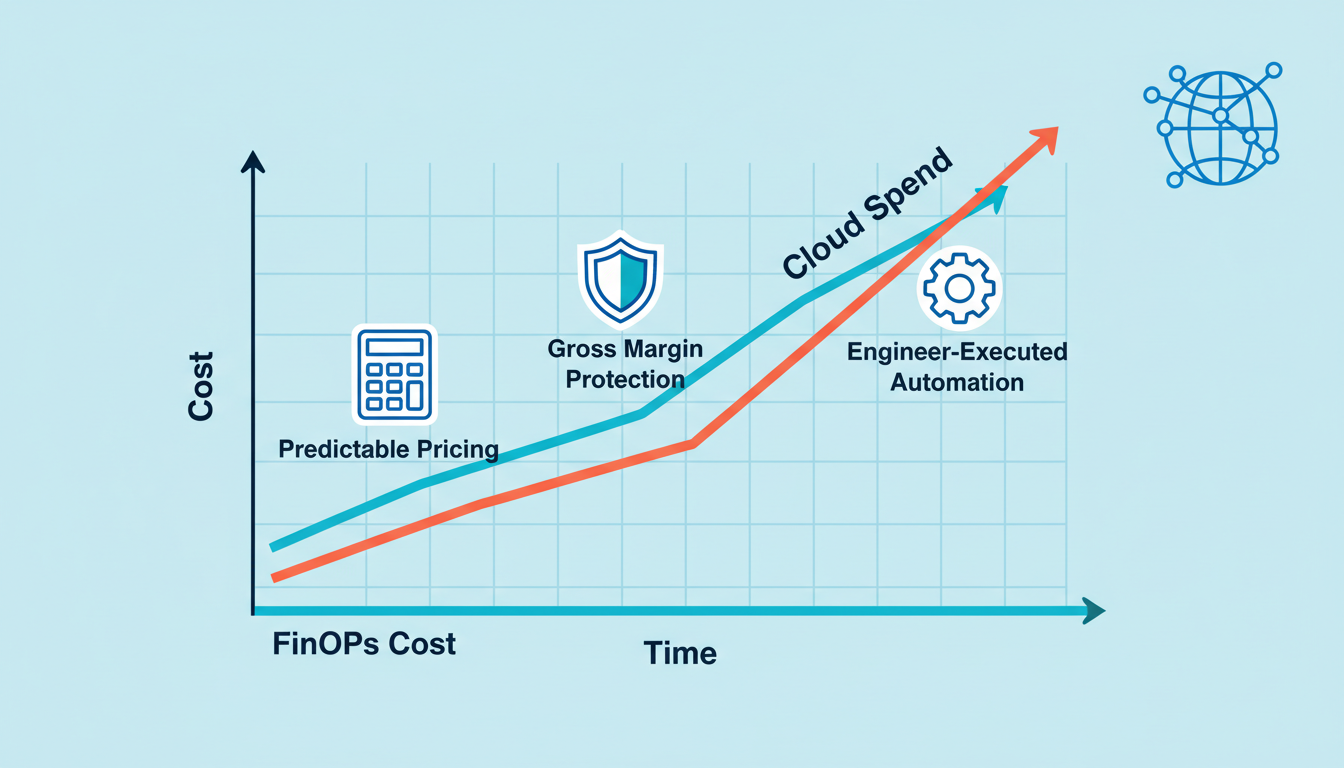
Cloud FinOps for AI/ML: Controlling GPU Instance & LLM Token Costs Across Multi-Cloud
CTOs and engineering leaders need Cloud FinOps for AI/ML. Learn to control GPU instance costs and LLM token spend across AWS, Azure, GCP, and.

- Canonical cost normalization across AWS, Azure, GCP, Kubernetes, and LLM APIs into FOCUS 1.0 schema.
- Real-time COGS and gross margin attribution mapped directly to engineering teams and customer tenants.
- Flat monthly pricing with engineer-executed savings automation, avoiding vendor lock-in or savings tax penalties.
The explosion of Artificial Intelligence (AI) and Machine Learning (ML) workloads has introduced a new frontier for cloud cost management. While traditional FinOps focuses on CPU, RAM, and storage, AI/ML introduces specialized and often exorbitantly priced resources: Graphics Processing Units (GPUs) and Large Language Model (LLM) API tokens. Without a dedicated FinOps strategy for AI/ML, these costs can quickly spiral out of control, eroding project ROI and impacting a company's gross margin.
CTOs and engineering leaders are grappling with questions like: How do we accurately attribute GPU spend to specific ML experiments or models? How can we optimize LLM token usage across different APIs (OpenAI, Anthropic) and detect wasteful consumption? And most importantly, how do we ensure our AI innovation isn't bankrupted by runaway infrastructure and API costs? The answer lies in integrating AI/ML cost visibility directly into a unified multi-cloud FinOps platform.
The Unique Challenges of AI/ML Cloud Costs
Unlike traditional compute, AI/ML infrastructure presents several unique cost challenges:
- High Unit Cost of GPUs: GPU instances (e.g., NVIDIA A100, H100 on AWS P4/G5, Azure ND/NC, GCP A2) are significantly more expensive than general-purpose CPUs. Under-utilization or inefficient scheduling can lead to massive waste.
- LLM API Token Volatility: Costs for OpenAI, Anthropic, and other LLM providers are often based on input/output token counts. These can fluctuate wildly with prompt engineering changes, model choices, and user interaction patterns, making forecasting difficult.
- Complex Attribution: Attributing GPU usage to specific data scientists, ML models, or experiments requires granular instrumentation beyond standard cloud tags. Similarly, LLM token costs need to be broken down by application, feature, or even end-user.
- Bursting Workloads: Many AI/ML training and inference workloads are bursty, requiring elastic scaling that, if not properly managed, can lead to over-provisioning during idle periods.
- Data Movement Costs: Moving large datasets between storage, compute, and different cloud regions for training can incur significant data transfer charges.
Addressing these challenges requires a sophisticated FinOps approach that goes beyond basic dashboards and provides deep visibility into GPU utilization, LLM token consumption, and the ability to link these costs directly to business value.
Why Traditional FinOps Tools Fail for AI/ML
Many legacy FinOps platforms and even newer point solutions struggle with AI/ML costs for several reasons:
- Limited AI/LLM API Integrations: Most tools are built for traditional IaaS/PaaS and lack native connectors to OpenAI, Anthropic, or specialized ML platforms, leaving a significant portion of AI spend untracked.
- Generic Tagging Limitations: Standard cloud tags are often insufficient to capture the granular dimensions needed for AI/ML cost attribution (e.g., ML experiment ID, model version, data scientist).
- Lack of GPU-Specific Metrics: While some tools show instance costs, they often lack the ability to correlate cost with actual GPU utilization metrics (CUDA core usage, memory usage) to identify under-provisioning or waste.
- No Unit Economics for Tokens: Calculating
cost per 1,000 AI tokensorcost per inferenceis critical for AI product gross margins, but this capability is rare outside of specialized platforms. - Software-Only Recommendations: Providing recommendations without the means to execute them leads to analysis paralysis, especially for complex GPU scheduling or LLM prompt optimization.
This gap means that CTOs and CFOs are often blind to the true cost drivers of their AI initiatives, making it impossible to forecast, budget, or optimize effectively.
CostGlass: Your Unified FinOps Platform for AI/ML & Multi-Cloud
CostGlass is engineered to provide comprehensive FinOps for AI/ML workloads, unifying GPU instance costs across AWS, Azure, and GCP with LLM token spend from OpenAI and Anthropic, alongside all other cloud and Kubernetes expenses. Our platform delivers the granular visibility and actionable insights needed to control AI/ML budgets and protect gross margins.
Granular GPU Cost Attribution & Optimization
CostGlass connects directly to your AWS, Azure, and GCP accounts, ingesting detailed billing and usage data. For GPU instances, we provide:
- Instance-Level Cost Tracking: See the exact spend for each GPU instance type (e.g.,
p4d.24xlarge,Standard_NC6s_v3,a2-highgpu-1g). - Rightsizing Recommendations: Based on CloudWatch, Azure Monitor, and GCP Recommender data, CostGlass identifies underutilized GPU instances and recommends smaller, more cost-effective alternatives without impacting performance. This is part of our Measured Rightsizing capabilities.
- Automated Scheduling: Use our Multi-Cloud Instance Scheduler to automatically stop GPU instances during off-hours or non-training periods, significantly reducing costs for development, staging, and even some production inference environments. This can be configured via simple tags like
cg-schedule:off-hours.
LLM Token Cost Management & Unit Economics
CostGlass provides native connectors to OpenAI and Anthropic, allowing you to track and optimize your LLM API spend at a granular level:
- Model-Level Spend: Break down costs by specific models (e.g.,
gpt-4-turbo,claude-3-opus,text-embedding-ada-002) to understand which models are driving the highest spend. - Input/Output Token Attribution: Gain visibility into input and output token consumption for accurate cost allocation.
- Batch API Discount Detection: CostGlass identifies opportunities to leverage Batch APIs for significant savings (up to 50% for OpenAI), highlighting areas where batching could reduce costs.
- AI Unit Economics: Integrate your LLM token spend with business metrics to calculate
cost per 1,000 AI tokens,cost per customer, orcost per inferenceusing our Unit Economics feature. This is crucial for protecting SaaS gross margins as AI features scale. - MCP Server for Real-time Querying: Our remote MCP server allows engineers to query live multi-cloud and AI costs directly from within Claude Desktop, Cursor, and other AI coding assistants, enabling real-time cost awareness during development.
Virtual Tagging for AI/ML Attribution
One of the biggest challenges in AI/ML FinOps is attributing shared GPU clusters or LLM API usage to specific teams, projects, or even individual data scientists. CostGlass's Virtual Tagging feature solves this by allowing you to create allocation rules retroactively:
- Retroactive Allocation: Assign untagged GPU instance hours or LLM token usage to specific cost centers based on metadata like instance names, project IDs, or even user accounts—without modifying your cloud resources.
- Complex Rules: Build sophisticated rules using
any/allboolean groups,contains,regex, andvalue_fromcloud tags to capture the nuances of AI/ML cost attribution. - AI Virtual Tag Builder: Use natural language to generate and validate Virtual Tag rules, with a live dry-run dollar impact preview before saving, making complex allocation simple and intuitive.
The Executive Advantage: Why CostGlass Delivers AI/ML FinOps ROI
For CTOs and CFOs, the decision to invest in an AI/ML FinOps platform boils down to clear ROI. CostGlass offers a compelling advantage over competitors and in-house solutions:
- Predictable Flat Pricing: Unlike competitors that charge a percentage of cloud spend (which penalizes growth in high-cost AI/ML environments) or add extra fees for Kubernetes and Unit Economics (like Finout's +$250-$500/mo for unit economics), CostGlass offers a transparent flat monthly fee. You keep 100% of every dollar saved on GPU and token costs.
- Software + Engineer Execution: Buying software-only recommendations is a common pitfall. CostGlass's Scale and Enterprise plans include 8+ dedicated senior DevOps/FinOps engineer-hours every month. Our engineers write the Terraform PRs, rightsize instances, configure schedules, and execute approved optimizations, delivering the ROI of a $180,000+/year FinOps hire for a fraction of the cost.
- Unified Multi-Cloud View: Why stitch together separate tools for AWS, Azure, GCP, Kubernetes, OpenAI, and Anthropic? CostGlass provides a single pane of glass across 13 native connectors, updated every 6 hours, giving executives a complete, normalized view of their entire cloud and AI spend.
- Board-Ready Unit Economics: Protect your SaaS gross margins by clearly mapping AI/ML costs to business metrics. CostGlass's Executive Reports Library provides audit-ready showback/chargeback matrices with 1-click Excel, PDF, and CSV board packs, ensuring financial transparency for your leadership.
Attempting to build an in-house solution for AI/ML cost management is a costly distraction. Fragile Python scripts, continuously breaking cloud billing schemas, and the diversion of highly paid engineering talent from core product development quickly outweigh any perceived savings. CostGlass provides a turnkey, continuously maintained, and proactively optimized solution that allows your teams to focus on innovation, not infrastructure plumbing.
How to Configure AI/ML FinOps in CostGlass
Getting started with AI/ML FinOps in CostGlass is straightforward:
- Connect Your Cloud Providers: Integrate your AWS, Azure, and GCP accounts to capture GPU instance costs. Follow our guides for connecting AWS, Azure, and GCP.
- Connect AI/LLM Providers: Use our SaaS & AI connector to link your OpenAI and Anthropic organizations. This will immediately begin ingesting token usage and cost data.
- Explore AI/ML Spend: Navigate to the Cost Explorer and filter by service to view GPU instances (e.g., EC2, Azure VMs, GCP Compute Engine) and AI/LLM services.
- Implement Virtual Tags: Create Virtual Tags to attribute shared GPU clusters or LLM API keys to specific teams or projects. Use the AI Virtual Tag Builder for rapid rule creation.
- Set Up Unit Economics: Define your AI-specific unit economics (e.g.,
cost per 1k tokens) by correlating LLM spend with your business metrics in the Unit Economics section. - Automate Savings: Configure Instance Schedules for your GPU instances to automatically shut them down during idle periods. Review Rightsizing recommendations for underutilized GPUs.
By following these steps, you'll gain unparalleled visibility and control over your AI/ML cloud costs, transforming a potential financial drain into a strategic advantage.
Frequently Asked Questions
Q: Can CostGlass track GPU utilization, not just cost?
A: Yes, CostGlass ingests utilization metrics from CloudWatch (AWS), Azure Monitor, and GCP Monitoring alongside billing data. Our rightsizing recommendations leverage these metrics (e.g., p95 CPU/memory/GPU utilization) to ensure optimal resource allocation and cost efficiency for your GPU instances.
Q: How does CostGlass handle the dynamic nature of LLM token costs?
A: CostGlass provides real-time (6-hour refresh) ingestion of OpenAI and Anthropic token usage and costs. Our anomaly detection system can alert you to sudden spikes in token consumption, and our Unit Economics feature allows you to track cost per 1k tokens against your product's business metrics, providing early warnings if AI costs threaten gross margins.
Q: Is CostGlass suitable for large enterprises with strict data residency requirements for AI/ML FinOps data?
A: Absolutely. CostGlass offers sovereign data residency cells in the UK, EU, US, and APAC, allowing you to pin your billing telemetry to a specific region. For the strictest compliance needs, our Enterprise plan supports private, in-account AWS deployments (BYOC), ensuring zero financial data ever leaves your cloud boundary. This is critical for regulated industries leveraging AI/ML.
Ready to take control of your AI/ML cloud costs? Explore how CostGlass provides unified multi-cloud FinOps with transparent flat pricing and engineer-executed savings. Visit our comparison page to see how we stack up against alternatives, or learn more about our AI/LLM connectors today.
La explosión de las cargas de trabajo de Inteligencia Artificial (IA) y Machine Learning (ML) ha introducido una nueva frontera para la gestión de costos en la nube. Mientras que el FinOps tradicional se enfoca en CPU, RAM y almacenamiento, la IA/ML introduce recursos especializados y a menudo exorbitantemente caros: Unidades de Procesamiento Gráfico (GPUs) y tokens de API de Modelos de Lenguaje Grande (LLM). Sin una estrategia FinOps dedicada para IA/ML, estos costos pueden salirse rápidamente de control, erosionando el ROI del proyecto y afectando el margen bruto de una empresa.
Los CTOs y líderes de ingeniería se enfrentan a preguntas como: ¿Cómo atribuimos con precisión el gasto de GPU a experimentos o modelos de ML específicos? ¿Cómo podemos optimizar el uso de tokens LLM en diferentes APIs (OpenAI, Anthropic) y detectar el consumo derrochador? Y lo más importante, ¿cómo nos aseguramos de que nuestra innovación en IA no se vea arruinada por los costos descontrolados de infraestructura y API? La respuesta radica en integrar la visibilidad de costos de IA/ML directamente en una plataforma FinOps multi-cloud unificada.
Los Desafíos Únicos de los Costos Cloud de IA/ML
A diferencia de la computación tradicional, la infraestructura de IA/ML presenta varios desafíos de costos únicos:
- Alto Costo Unitario de las GPUs: Las instancias de GPU (por ejemplo, NVIDIA A100, H100 en AWS P4/G5, Azure ND/NC, GCP A2) son significativamente más caras que las CPUs de propósito general. La subutilización o la programación ineficiente pueden llevar a un desperdicio masivo.
- Volatilidad de los Tokens de API LLM: Los costos de OpenAI, Anthropic y otros proveedores de LLM a menudo se basan en el recuento de tokens de entrada/salida. Estos pueden fluctuar drásticamente con los cambios en la ingeniería de prompts, las elecciones de modelos y los patrones de interacción del usuario, lo que dificulta la previsión.
- Atribución Compleja: Atribuir el uso de GPU a científicos de datos específicos, modelos de ML o experimentos requiere una instrumentación granular más allá de las etiquetas cloud estándar. De manera similar, los costos de tokens LLM deben desglosarse por aplicación, característica o incluso usuario final.
- Cargas de Trabajo en Ráfagas: Muchas cargas de trabajo de entrenamiento e inferencia de IA/ML son en ráfagas, lo que requiere un escalado elástico que, si no se gestiona correctamente, puede llevar a un sobreaprovisionamiento durante los períodos de inactividad.
- Costos de Movimiento de Datos: Mover grandes conjuntos de datos entre almacenamiento, computación y diferentes regiones cloud para el entrenamiento puede incurrir en importantes cargos por transferencia de datos.
Abordar estos desafíos requiere un enfoque FinOps sofisticado que vaya más allá de los paneles básicos y proporcione una visibilidad profunda del uso de GPU, el consumo de tokens LLM y la capacidad de vincular estos costos directamente al valor comercial.
Por Qué las Herramientas FinOps Tradicionales Fallan para IA/ML
Muchas plataformas FinOps heredadas e incluso soluciones puntuales más nuevas tienen dificultades con los costos de IA/ML por varias razones:
- Integraciones Limitadas de API de IA/LLM: La mayoría de las herramientas están diseñadas para IaaS/PaaS tradicional y carecen de conectores nativos para OpenAI, Anthropic o plataformas de ML especializadas, dejando una parte significativa del gasto en IA sin seguimiento.
- Limitaciones de Etiquetado Genérico: Las etiquetas cloud estándar a menudo son insuficientes para capturar las dimensiones granulares necesarias para la atribución de costos de IA/ML (por ejemplo, ID de experimento de ML, versión del modelo, científico de datos).
- Falta de Métricas Específicas de GPU: Si bien algunas herramientas muestran los costos de las instancias, a menudo carecen de la capacidad de correlacionar el costo con las métricas reales de utilización de GPU (uso de núcleos CUDA, uso de memoria) para identificar el subaprovisionamiento o el desperdicio.
- Sin Economía Unitaria para Tokens: Calcular el
costo por 1,000 tokens de IAo elcosto por inferenciaes fundamental para los márgenes brutos de los productos de IA, pero esta capacidad es rara fuera de las plataformas especializadas. - Recomendaciones Solo de Software: Proporcionar recomendaciones sin los medios para ejecutarlas lleva a la parálisis del análisis, especialmente para la programación compleja de GPU o la optimización de prompts de LLM.
Esta brecha significa que los CTOs y CFOs a menudo están ciegos a los verdaderos impulsores de costos de sus iniciativas de IA, lo que hace imposible pronosticar, presupuestar u optimizar de manera efectiva.
CostGlass: Su Plataforma FinOps Unificada para IA/ML y Multi-Cloud
CostGlass está diseñado para proporcionar un FinOps integral para cargas de trabajo de IA/ML, unificando los costos de instancias GPU en AWS, Azure y GCP con el gasto de tokens LLM de OpenAI y Anthropic, junto con todos los demás gastos de la nube y Kubernetes. Nuestra plataforma ofrece la visibilidad granular y los conocimientos procesables necesarios para controlar los presupuestos de IA/ML y proteger los márgenes brutos.
Atribución y Optimización Granular de Costos de GPU
CostGlass se conecta directamente a sus cuentas de AWS, Azure y GCP, ingiriendo datos detallados de facturación y uso. Para las instancias de GPU, proporcionamos:
- Seguimiento de Costos a Nivel de Instancia: Vea el gasto exacto para cada tipo de instancia de GPU (por ejemplo,
p4d.24xlarge,Standard_NC6s_v3,a2-highgpu-1g). - Recomendaciones de Rightsizing: Basado en datos de CloudWatch, Azure Monitor y GCP Recommender, CostGlass identifica instancias de GPU subutilizadas y recomienda alternativas más pequeñas y rentables sin afectar el rendimiento. Esto es parte de nuestras capacidades de Rightsizing Medido.
- Programación Automatizada: Utilice nuestro Programador de Instancias Multi-Cloud para detener automáticamente las instancias de GPU durante las horas no laborables o los períodos sin entrenamiento, reduciendo significativamente los costos para el desarrollo, staging e incluso algunos entornos de inferencia de producción. Esto se puede configurar mediante etiquetas simples como
cg-schedule:off-hours.
Gestión de Costos de Tokens LLM y Economía Unitaria
CostGlass proporciona conectores nativos para OpenAI y Anthropic, lo que le permite rastrear y optimizar su gasto de API LLM a un nivel granular:
- Gasto a Nivel de Modelo: Desglose los costos por modelos específicos (por ejemplo,
gpt-4-turbo,claude-3-opus,text-embedding-ada-002) para comprender qué modelos están generando el mayor gasto. - Atribución de Tokens de Entrada/Salida: Obtenga visibilidad del consumo de tokens de entrada y salida para una asignación precisa de costos.
- Detección de Descuentos de API por Lotes: CostGlass identifica oportunidades para aprovechar las API por lotes para obtener ahorros significativos (hasta un 50% para OpenAI), destacando áreas donde el procesamiento por lotes podría reducir los costos.
- Economía Unitaria de IA: Integre su gasto de tokens LLM con métricas comerciales para calcular el
costo por 1,000 tokens de IA, elcosto por clienteo elcosto por inferenciautilizando nuestra función de Economía Unitaria. Esto es crucial para proteger los márgenes brutos de SaaS a medida que las características de IA escalan. - Servidor MCP para Consultas en Tiempo Real: Nuestro servidor MCP remoto permite a los ingenieros consultar costos multi-cloud y de IA en vivo directamente desde Claude Desktop, Cursor y otros asistentes de codificación de IA, lo que permite la conciencia de costos en tiempo real durante el desarrollo.
Etiquetado Virtual para Atribución de IA/ML
Uno de los mayores desafíos en FinOps de IA/ML es atribuir clústeres de GPU compartidos o el uso de API LLM a equipos, proyectos o incluso científicos de datos individuales específicos. La función de Etiquetado Virtual de CostGlass resuelve esto al permitirle crear reglas de asignación retroactivamente:
- Asignación Retroactiva: Asigne horas de instancias de GPU sin etiquetar o uso de tokens LLM a centros de costos específicos basados en metadatos como nombres de instancias, ID de proyectos o incluso cuentas de usuario, sin modificar sus recursos cloud.
- Reglas Complejas: Construya reglas sofisticadas utilizando grupos booleanos
any/all,contains,regexy etiquetas cloudvalue_frompara capturar los matices de la atribución de costos de IA/ML. - Constructor de Etiquetas Virtuales de IA: Utilice lenguaje natural para generar y validar reglas de Etiquetas Virtuales, con una vista previa en vivo del impacto en dólares antes de guardar, lo que hace que la asignación compleja sea simple e intuitiva.
La Ventaja Ejecutiva: Por Qué CostGlass Ofrece ROI en FinOps de IA/ML
Para los CTOs y CFOs, la decisión de invertir en una plataforma FinOps de IA/ML se reduce a un ROI claro. CostGlass ofrece una ventaja convincente sobre los competidores y las soluciones internas:
- Precios Planos Predecibles: A diferencia de los competidores que cobran un porcentaje del gasto cloud (lo que penaliza el crecimiento en entornos de IA/ML de alto costo) o agregan tarifas adicionales para Kubernetes y Economía Unitaria (como los +$250-$500/mes de Finout para economía unitaria), CostGlass ofrece una tarifa mensual plana transparente. Usted conserva el 100% de cada dólar ahorrado en costos de GPU y tokens.
- Software + Ejecución de Ingenieros: Comprar recomendaciones solo de software es un error común. Los planes Scale y Enterprise de CostGlass incluyen 8+ horas dedicadas de ingenieros senior de DevOps/FinOps cada mes. Nuestros ingenieros escriben los PRs de Terraform, dimensionan las instancias, configuran los horarios y ejecutan las optimizaciones aprobadas, entregando el ROI de un empleado de FinOps de más de $180,000/año por una fracción del costo.
- Vista Multi-Cloud Unificada: ¿Por qué unir herramientas separadas para AWS, Azure, GCP, Kubernetes, OpenAI y Anthropic? CostGlass proporciona un único panel de control a través de 13 conectores nativos, actualizados cada 6 horas, brindando a los ejecutivos una vista completa y normalizada de todo su gasto en la nube y en IA.
- Economía Unitaria Lista para la Junta: Proteja sus márgenes brutos de SaaS mapeando claramente los costos de IA/ML a las métricas comerciales. La Biblioteca de Informes Ejecutivos de CostGlass proporciona matrices de showback/chargeback listas para auditoría con paquetes de junta en Excel, PDF y CSV con 1 clic, asegurando la transparencia financiera para su liderazgo.
Intentar construir una solución interna para la gestión de costos de IA/ML es una distracción costosa. Los scripts de Python frágiles, los esquemas de facturación cloud que se rompen continuamente y la desviación de talento de ingeniería altamente remunerado del desarrollo de productos centrales superan rápidamente cualquier ahorro percibido. CostGlass proporciona una solución llave en mano, mantenida continuamente y optimizada proactivamente que permite a sus equipos centrarse en la innovación, no en la fontanería de la infraestructura.
Cómo Configurar FinOps de IA/ML en CostGlass
Comenzar con FinOps de IA/ML en CostGlass es sencillo:
- Conecte Sus Proveedores Cloud: Integre sus cuentas de AWS, Azure y GCP para capturar los costos de las instancias de GPU. Siga nuestras guías para conectar AWS, Azure y GCP.
- Conecte Proveedores de IA/LLM: Utilice nuestro conector SaaS y AI para vincular sus organizaciones de OpenAI y Anthropic. Esto comenzará inmediatamente a ingerir el uso de tokens y los datos de costos.
- Explore el Gasto en IA/ML: Navegue al Explorador de Costos y filtre por servicio para ver las instancias de GPU (por ejemplo, EC2, Azure VMs, GCP Compute Engine) y los servicios de IA/LLM.
- Implemente Etiquetas Virtuales: Cree Etiquetas Virtuales para atribuir clústeres de GPU compartidos o claves de API LLM a equipos o proyectos específicos. Utilice el Constructor de Etiquetas Virtuales de IA para una creación rápida de reglas.
- Configure la Economía Unitaria: Defina su economía unitaria específica de IA (por ejemplo,
costo por 1k tokens) correlacionando el gasto de LLM con sus métricas comerciales en la sección de Economía Unitaria. - Automatice los Ahorros: Configure Programaciones de Instancias para sus instancias de GPU para apagarlas automáticamente durante los períodos de inactividad. Revise las recomendaciones de Rightsizing para GPUs subutilizadas.
Siguiendo estos pasos, obtendrá una visibilidad y un control inigualables sobre sus costos cloud de IA/ML, transformando un posible drenaje financiero en una ventaja estratégica.
Preguntas Frecuentes
P: ¿Puede CostGlass rastrear la utilización de GPU, no solo el costo?
R: Sí, CostGlass ingiere métricas de utilización de CloudWatch (AWS), Azure Monitor y GCP Monitoring junto con los datos de facturación. Nuestras recomendaciones de rightsizing aprovechan estas métricas (por ejemplo, utilización p95 de CPU/memoria/GPU) para garantizar una asignación óptima de recursos y eficiencia de costos para sus instancias de GPU.
P: ¿Cómo maneja CostGlass la naturaleza dinámica de los costos de tokens LLM?
R: CostGlass proporciona una ingesta en tiempo real (actualización cada 6 horas) del uso y los costos de tokens de OpenAI y Anthropic. Nuestro sistema de detección de anomalías puede alertarle sobre picos repentinos en el consumo de tokens, y nuestra función de Economía Unitaria le permite rastrear el costo por 1k tokens frente a las métricas comerciales de su producto, proporcionando advertencias tempranas si los costos de IA amenazan los márgenes brutos.
P: ¿Es CostGlass adecuado para grandes empresas con estrictos requisitos de residencia de datos para los datos de FinOps de IA/ML?
R: Absolutamente. CostGlass ofrece celdas de residencia de datos soberanas en el Reino Unido, la UE, EE. UU. y APAC, lo que le permite anclar su telemetría de facturación a una región específica. Para las necesidades de cumplimiento más estrictas, nuestro plan Enterprise admite implementaciones privadas de AWS en la cuenta (BYOC), lo que garantiza que ningún dato financiero salga de los límites de su nube. Esto es fundamental para las industrias reguladas que aprovechan la IA/ML.
¿Listo para tomar el control de sus costos cloud de IA/ML? Explore cómo CostGlass proporciona FinOps multi-cloud unificado con precios planos transparentes y ahorros ejecutados por ingenieros. Visite nuestra página de comparación para ver cómo nos comparamos con las alternativas, o aprenda más sobre nuestros conectores de IA/LLM hoy mismo.
Die explosionsartige Zunahme von Workloads im Bereich Künstliche Intelligenz (KI) und Maschinelles Lernen (ML) hat eine neue Grenze für das Cloud-Kostenmanagement eröffnet. Während sich traditionelles FinOps auf CPU, RAM und Speicher konzentriert, führt KI/ML spezialisierte und oft exorbitant teure Ressourcen ein: Graphics Processing Units (GPUs) und Large Language Model (LLM) API-Tokens. Ohne eine dedizierte FinOps-Strategie für KI/ML können diese Kosten schnell außer Kontrolle geraten, den ROI von Projekten schmälern und die Bruttomarge eines Unternehmens beeinträchtigen.
CTOs und Engineering-Leiter ringen mit Fragen wie: Wie ordnen wir GPU-Ausgaben bestimmten ML-Experimenten oder -Modellen genau zu? Wie können wir die LLM-Token-Nutzung über verschiedene APIs (OpenAI, Anthropic) optimieren und verschwenderischen Verbrauch erkennen? Und am wichtigsten: Wie stellen wir sicher, dass unsere KI-Innovation nicht durch ausufernde Infrastruktur- und API-Kosten bankrott geht? Die Antwort liegt in der direkten Integration der KI/ML-Kostentransparenz in eine einheitliche Multi-Cloud-FinOps-Plattform.
Die einzigartigen Herausforderungen von KI/ML-Cloud-Kosten
Im Gegensatz zu traditionellem Compute stellt die KI/ML-Infrastruktur mehrere einzigartige Kostenherausforderungen dar:
- Hohe Stückkosten von GPUs: GPU-Instanzen (z. B. NVIDIA A100, H100 auf AWS P4/G5, Azure ND/NC, GCP A2) sind deutlich teurer als Allzweck-CPUs. Unterauslastung oder ineffiziente Planung können zu massiver Verschwendung führen.
- Volatilität der LLM-API-Tokens: Die Kosten für OpenAI, Anthropic und andere LLM-Anbieter basieren oft auf der Anzahl der Eingabe-/Ausgabe-Tokens. Diese können mit Änderungen im Prompt Engineering, der Modellwahl und den Benutzerinteraktionsmustern stark schwanken, was die Prognose erschwert.
- Komplexe Zuordnung: Die Zuordnung der GPU-Nutzung zu bestimmten Datenwissenschaftlern, ML-Modellen oder Experimenten erfordert eine granulare Instrumentierung, die über Standard-Cloud-Tags hinausgeht. Ebenso müssen LLM-Token-Kosten nach Anwendung, Funktion oder sogar Endbenutzer aufgeschlüsselt werden.
- Bursting Workloads: Viele KI/ML-Trainings- und Inferenz-Workloads sind sprunghaft und erfordern eine elastische Skalierung, die, wenn sie nicht richtig verwaltet wird, in Leerlaufzeiten zu Überprovisionierung führen kann.
- Kosten für Datenverschiebung: Das Verschieben großer Datensätze zwischen Speicher, Compute und verschiedenen Cloud-Regionen für das Training kann erhebliche Kosten für die Datenübertragung verursachen.
Die Bewältigung dieser Herausforderungen erfordert einen ausgeklügelten FinOps-Ansatz, der über grundlegende Dashboards hinausgeht und tiefe Einblicke in die GPU-Auslastung, den LLM-Token-Verbrauch und die Möglichkeit bietet, diese Kosten direkt mit dem Geschäftswert zu verknüpfen.
Warum traditionelle FinOps-Tools für KI/ML versagen
Viele ältere FinOps-Plattformen und sogar neuere Punktlösungen haben aus mehreren Gründen Schwierigkeiten mit KI/ML-Kosten:
- Begrenzte KI/LLM-API-Integrationen: Die meisten Tools sind für traditionelles IaaS/PaaS konzipiert und verfügen nicht über native Konnektoren zu OpenAI, Anthropic oder spezialisierten ML-Plattformen, wodurch ein erheblicher Teil der KI-Ausgaben unaufgezeichnet bleibt.
- Einschränkungen generischer Tags: Standard-Cloud-Tags reichen oft nicht aus, um die granularen Dimensionen zu erfassen, die für die KI/ML-Kostenattribution erforderlich sind (z. B. ML-Experiment-ID, Modellversion, Datenwissenschaftler).
- Fehlende GPU-spezifische Metriken: Während einige Tools Instanzkosten anzeigen, fehlt ihnen oft die Fähigkeit, Kosten mit tatsächlichen GPU-Auslastungsmetriken (CUDA-Core-Nutzung, Speichernutzung) zu korrelieren, um Unterprovisionierung oder Verschwendung zu identifizieren.
- Keine Unit Economics für Tokens: Die Berechnung der
Kosten pro 1.000 KI-Tokensoder derKosten pro Inferenzist entscheidend für die Bruttomargen von KI-Produkten, aber diese Fähigkeit ist außerhalb spezialisierter Plattformen selten. - Nur-Software-Empfehlungen: Das Bereitstellen von Empfehlungen ohne die Möglichkeit, diese umzusetzen, führt zu einer Analyse-Paralyse, insbesondere bei komplexer GPU-Planung oder LLM-Prompt-Optimierung.
Diese Lücke bedeutet, dass CTOs und CFOs oft blind für die wahren Kostentreiber ihrer KI-Initiativen sind, was eine effektive Prognose, Budgetierung oder Optimierung unmöglich macht.
CostGlass: Ihre einheitliche FinOps-Plattform für KI/ML & Multi-Cloud
CostGlass wurde entwickelt, um umfassendes FinOps für KI/ML-Workloads bereitzustellen, indem GPU-Instanzkosten über AWS, Azure und GCP mit LLM-Token-Ausgaben von OpenAI und Anthropic sowie allen anderen Cloud- und Kubernetes-Kosten vereinheitlicht werden. Unsere Plattform liefert die granulare Transparenz und die umsetzbaren Erkenntnisse, die zur Kontrolle von KI/ML-Budgets und zum Schutz der Bruttomargen erforderlich sind.
Granulare GPU-Kostenattribution und -Optimierung
CostGlass verbindet sich direkt mit Ihren AWS-, Azure- und GCP-Konten und erfasst detaillierte Abrechnungs- und Nutzungsdaten. Für GPU-Instanzen bieten wir:
- Kostenverfolgung auf Instanzebene: Sehen Sie die genauen Ausgaben für jeden GPU-Instanztyp (z. B.
p4d.24xlarge,Standard_NC6s_v3,a2-highgpu-1g). - Rightsizing-Empfehlungen: Basierend auf CloudWatch-, Azure Monitor- und GCP Recommender-Daten identifiziert CostGlass unterausgelastete GPU-Instanzen und empfiehlt kleinere, kostengünstigere Alternativen, ohne die Leistung zu beeinträchtigen. Dies ist Teil unserer Measured Rightsizing-Funktionen.
- Automatisierte Planung: Verwenden Sie unseren Multi-Cloud Instance Scheduler, um GPU-Instanzen während der Nebenzeiten oder Nicht-Trainingszeiten automatisch zu stoppen, wodurch die Kosten für Entwicklungs-, Staging- und sogar einige Produktionsinferenzumgebungen erheblich gesenkt werden. Dies kann über einfache Tags wie
cg-schedule:off-hourskonfiguriert werden.
LLM-Token-Kostenmanagement und Unit Economics
CostGlass bietet native Konnektoren zu OpenAI und Anthropic, mit denen Sie Ihre LLM-API-Ausgaben auf granularer Ebene verfolgen und optimieren können:
- Ausgaben auf Modellebene: Teilen Sie die Kosten nach spezifischen Modellen auf (z. B.
gpt-4-turbo,claude-3-opus,text-embedding-ada-002), um zu verstehen, welche Modelle die höchsten Ausgaben verursachen. - Attribution von Eingabe-/Ausgabe-Tokens: Erhalten Sie Einblicke in den Verbrauch von Eingabe- und Ausgabe-Tokens für eine genaue Kostenzuordnung.
- Erkennung von Batch-API-Rabatten: CostGlass identifiziert Möglichkeiten zur Nutzung von Batch-APIs für erhebliche Einsparungen (bis zu 50 % für OpenAI) und zeigt Bereiche auf, in denen Batching die Kosten senken könnte.
- KI-Unit Economics: Integrieren Sie Ihre LLM-Token-Ausgaben mit Geschäftsmetriken, um die
Kosten pro 1.000 KI-Tokens, dieKosten pro Kundeoder dieKosten pro Inferenzmithilfe unserer Unit Economics-Funktion zu berechnen. Dies ist entscheidend für den Schutz der SaaS-Bruttomargen, wenn KI-Funktionen skaliert werden. - MCP-Server für Echtzeitabfragen: Unser Remote-MCP-Server ermöglicht es Ingenieuren, Live-Multi-Cloud- und KI-Kosten direkt aus Claude Desktop, Cursor und anderen KI-Codierungsassistenten abzufragen, was ein Echtzeit-Kostenbewusstsein während der Entwicklung ermöglicht.
Virtuelles Tagging für KI/ML-Attribution
Eine der größten Herausforderungen im KI/ML-FinOps ist die Zuordnung von gemeinsam genutzten GPU-Clustern oder der LLM-API-Nutzung zu bestimmten Teams, Projekten oder sogar einzelnen Datenwissenschaftlern. Die Virtual Tagging-Funktion von CostGlass löst dies, indem sie Ihnen ermöglicht, Zuordnungsregeln rückwirkend zu erstellen:
- Rückwirkende Zuordnung: Weisen Sie nicht getaggte GPU-Instanzstunden oder LLM-Token-Nutzung bestimmten Kostenstellen basierend auf Metadaten wie Instanznamen, Projekt-IDs oder sogar Benutzerkonten zu – ohne Ihre Cloud-Ressourcen zu ändern.
- Komplexe Regeln: Erstellen Sie ausgeklügelte Regeln mit
any/allbooleschen Gruppen,contains,regexundvalue_fromCloud-Tags, um die Nuancen der KI/ML-Kostenattribution zu erfassen. - KI Virtual Tag Builder: Verwenden Sie natürliche Sprache, um Virtual Tag-Regeln zu generieren und zu validieren, mit einer Live-Vorschau der Dollar-Auswirkungen vor dem Speichern, was komplexe Zuordnungen einfach und intuitiv macht.
Der Executive-Vorteil: Warum CostGlass KI/ML-FinOps-ROI liefert
Für CTOs und CFOs läuft die Entscheidung, in eine KI/ML-FinOps-Plattform zu investieren, auf einen klaren ROI hinaus. CostGlass bietet einen überzeugenden Vorteil gegenüber Wettbewerbern und Inhouse-Lösungen:
- Vorhersehbare Pauschalpreise: Im Gegensatz zu Wettbewerbern, die einen Prozentsatz der Cloud-Ausgaben berechnen (was das Wachstum in kostenintensiven KI/ML-Umgebungen bestraft) oder zusätzliche Gebühren für Kubernetes und Unit Economics erheben (wie Finouts +250-500 $/Monat für Unit Economics), bietet CostGlass eine transparente monatliche Pauschalgebühr. Sie behalten 100 % jedes gesparten Dollars bei GPU- und Token-Kosten.
- Software + Ingenieur-Ausführung: Der Kauf von reinen Software-Empfehlungen ist eine häufige Falle. Die Scale- und Enterprise-Pläne von CostGlass beinhalten 8+ dedizierte Senior DevOps/FinOps-Ingenieurstunden jeden Monat. Unsere Ingenieure schreiben die Terraform-PRs, dimensionieren Instanzen richtig, konfigurieren Zeitpläne und führen genehmigte Optimierungen aus, wodurch der ROI einer FinOps-Einstellung von über 180.000 $/Jahr zu einem Bruchteil der Kosten erzielt wird.
- Einheitliche Multi-Cloud-Ansicht: Warum separate Tools für AWS, Azure, GCP, Kubernetes, OpenAI und Anthropic zusammenfügen? CostGlass bietet ein einziges Dashboard über 13 native Konnektoren, das alle 6 Stunden aktualisiert wird und Führungskräften eine vollständige, normalisierte Ansicht ihrer gesamten Cloud- und KI-Ausgaben bietet.
- Board-Ready Unit Economics: Schützen Sie Ihre SaaS-Bruttomargen, indem Sie KI/ML-Kosten klar Geschäftsmetriken zuordnen. Die Executive Reports Library von CostGlass bietet auditfähige Showback-/Chargeback-Matrizen mit 1-Klick-Excel-, PDF- und CSV-Board-Paketen, die finanzielle Transparenz für Ihre Führungskräfte gewährleisten.
Der Versuch, eine interne Lösung für das KI/ML-Kostenmanagement zu entwickeln, ist eine kostspielige Ablenkung. Fragile Python-Skripte, ständig brechende Cloud-Abrechnungsschemata und die Abzweigung hochbezahlter Ingenieure von der Kernproduktentwicklung überwiegen schnell alle vermeintlichen Einsparungen. CostGlass bietet eine schlüsselfertige, kontinuierlich gewartete und proaktiv optimierte Lösung, die es Ihren Teams ermöglicht, sich auf Innovation zu konzentrieren, nicht auf die Infrastruktur-Klempnerei.
So konfigurieren Sie KI/ML FinOps in CostGlass
Der Einstieg in KI/ML FinOps in CostGlass ist unkompliziert:
- Verbinden Sie Ihre Cloud-Anbieter: Integrieren Sie Ihre AWS-, Azure- und GCP-Konten, um die Kosten für GPU-Instanzen zu erfassen. Befolgen Sie unsere Anleitungen zum Verbinden von AWS, Azure und GCP.
- Verbinden Sie KI/LLM-Anbieter: Verwenden Sie unseren SaaS & AI-Konnektor, um Ihre OpenAI- und Anthropic-Organisationen zu verknüpfen. Dadurch werden sofort Token-Nutzungs- und Kostendaten erfasst.
- KI/ML-Ausgaben erkunden: Navigieren Sie zum Cost Explorer und filtern Sie nach Dienst, um GPU-Instanzen (z. B. EC2, Azure VMs, GCP Compute Engine) und KI/LLM-Dienste anzuzeigen.
- Virtuelle Tags implementieren: Erstellen Sie Virtuelle Tags, um gemeinsam genutzte GPU-Cluster oder LLM-API-Schlüssel bestimmten Teams oder Projekten zuzuordnen. Verwenden Sie den AI Virtual Tag Builder für die schnelle Regelerstellung.
- Unit Economics einrichten: Definieren Sie Ihre KI-spezifischen Unit Economics (z. B.
Kosten pro 1k Tokens), indem Sie die LLM-Ausgaben mit Ihren Geschäftsmetriken im Bereich Unit Economics korrelieren. - Einsparungen automatisieren: Konfigurieren Sie Instanzzeitpläne für Ihre GPU-Instanzen, um sie während Leerlaufzeiten automatisch herunterzufahren. Überprüfen Sie die Rightsizing-Empfehlungen für unterausgelastete GPUs.
Durch die Befolgung dieser Schritte erhalten Sie eine beispiellose Transparenz und Kontrolle über Ihre KI/ML-Cloud-Kosten und verwandeln eine potenzielle finanzielle Belastung in einen strategischen Vorteil.
Häufig gestellte Fragen
F: Kann CostGlass die GPU-Auslastung verfolgen, nicht nur die Kosten?
A: Ja, CostGlass erfasst Auslastungsmetriken von CloudWatch (AWS), Azure Monitor und GCP Monitoring zusammen mit Abrechnungsdaten. Unsere Rightsizing-Empfehlungen nutzen diese Metriken (z. B. p95 CPU-/Speicher-/GPU-Auslastung), um eine optimale Ressourcenzuweisung und Kosteneffizienz für Ihre GPU-Instanzen zu gewährleisten.
F: Wie geht CostGlass mit der dynamischen Natur der LLM-Token-Kosten um?
A: CostGlass bietet eine Echtzeit-Erfassung (alle 6 Stunden) der OpenAI- und Anthropic-Token-Nutzung und -Kosten. Unser Anomalieerkennungssystem kann Sie auf plötzliche Spitzen im Token-Verbrauch aufmerksam machen, und unsere Unit Economics-Funktion ermöglicht es Ihnen, die Kosten pro 1k Tokens im Vergleich zu den Geschäftsmetriken Ihres Produkts zu verfolgen, was frühzeitige Warnungen liefert, wenn KI-Kosten die Bruttomargen bedrohen.
F: Ist CostGlass für große Unternehmen mit strengen Anforderungen an die Datenresidenz für KI/ML FinOps-Daten geeignet?
A: Absolut. CostGlass bietet souveräne Datenresidenzzellen in Großbritannien, der EU, den USA und APAC, sodass Sie Ihre Abrechnungstelemetrie an eine bestimmte Region binden können. Für die strengsten Compliance-Anforderungen unterstützt unser Enterprise-Plan private, In-Account-AWS-Bereitstellungen (BYOC), die sicherstellen, dass keine Finanzdaten jemals Ihre Cloud-Grenzen verlassen. Dies ist entscheidend für regulierte Branchen, die KI/ML nutzen.
Bereit, die Kontrolle über Ihre KI/ML-Cloud-Kosten zu übernehmen? Entdecken Sie, wie CostGlass ein einheitliches Multi-Cloud-FinOps mit transparenten Pauschalpreisen und von Ingenieuren ausgeführten Einsparungen bietet. Besuchen Sie unsere Vergleichsseite, um zu sehen, wie wir uns von Alternativen abheben, oder erfahren Sie noch heute mehr über unsere KI/LLM-Konnektoren.
L'explosion des charges de travail d'Intelligence Artificielle (IA) et de Machine Learning (ML) a introduit une nouvelle frontière pour la gestion des coûts du cloud. Alors que le FinOps traditionnel se concentre sur les CPU, la RAM et le stockage, l'IA/ML introduit des ressources spécialisées et souvent excessivement chères : les Unités de Traitement Graphique (GPU) et les tokens d'API de Grands Modèles de Langage (LLM). Sans une stratégie FinOps dédiée à l'IA/ML, ces coûts peuvent rapidement devenir incontrôlables, érodant le ROI des projets et impactant la marge brute d'une entreprise.
Les CTO et les leaders de l'ingénierie sont confrontés à des questions telles que : Comment attribuer précisément les dépenses GPU à des expériences ou modèles ML spécifiques ? Comment optimiser l'utilisation des tokens LLM sur différentes API (OpenAI, Anthropic) et détecter la consommation inutile ? Et surtout, comment nous assurer que notre innovation en IA ne soit pas ruinée par des coûts d'infrastructure et d'API incontrôlables ? La réponse réside dans l'intégration de la visibilité des coûts de l'IA/ML directement dans une plateforme FinOps multi-cloud unifiée.
Les Défis Uniques des Coûts Cloud de l'IA/ML
Contrairement au calcul traditionnel, l'infrastructure IA/ML présente plusieurs défis de coûts uniques :
- Coût Unitaire Élevé des GPU : Les instances GPU (par exemple, NVIDIA A100, H100 sur AWS P4/G5, Azure ND/NC, GCP A2) sont significativement plus chères que les CPU à usage général. La sous-utilisation ou une planification inefficace peut entraîner un gaspillage massif.
- Volatilité des Coûts des Tokens d'API LLM : Les coûts pour OpenAI, Anthropic et d'autres fournisseurs de LLM sont souvent basés sur le nombre de tokens d'entrée/sortie. Ceux-ci peuvent fluctuer énormément avec les changements d'ingénierie des prompts, les choix de modèles et les schémas d'interaction des utilisateurs, ce qui rend les prévisions difficiles.
- Attribution Complexe : L'attribution de l'utilisation des GPU à des scientifiques de données, des modèles ML ou des expériences spécifiques nécessite une instrumentation granulaire au-delà des balises cloud standard. De même, les coûts des tokens LLM doivent être ventilés par application, fonctionnalité ou même utilisateur final.
- Charges de Travail en Rafale : De nombreuses charges de travail d'entraînement et d'inférence en IA/ML sont en rafale, nécessitant une mise à l'échelle élastique qui, si elle n'est pas correctement gérée, peut entraîner un sur-provisionnement pendant les périodes d'inactivité.
- Coûts de Déplacement des Données : Le déplacement de grands ensembles de données entre le stockage, le calcul et différentes régions cloud pour l'entraînement peut entraîner des frais de transfert de données importants.
Relever ces défis nécessite une approche FinOps sophistiquée qui va au-delà des tableaux de bord de base et offre une visibilité approfondie sur l'utilisation des GPU, la consommation de tokens LLM et la capacité de lier ces coûts directement à la valeur commerciale.
Pourquoi les Outils FinOps Traditionnels Échouent pour l'IA/ML
De nombreuses plateformes FinOps héritées et même des solutions ponctuelles plus récentes ont du mal avec les coûts de l'IA/ML pour plusieurs raisons :
- Intégrations Limitées des API IA/LLM : La plupart des outils sont conçus pour l'IaaS/PaaS traditionnel et manquent de connecteurs natifs vers OpenAI, Anthropic ou les plateformes ML spécialisées, laissant une partie significative des dépenses d'IA non suivies.
- Limitations des Balises Génériques : Les balises cloud standard sont souvent insuffisantes pour capturer les dimensions granulaires nécessaires à l'attribution des coûts de l'IA/ML (par exemple, ID d'expérience ML, version du modèle, scientifique de données).
- Manque de Métriques Spécifiques aux GPU : Bien que certains outils affichent les coûts des instances, ils manquent souvent de la capacité à corréler les coûts avec les métriques d'utilisation réelles des GPU (utilisation des cœurs CUDA, utilisation de la mémoire) pour identifier le sous-provisionnement ou le gaspillage.
- Pas d'Économie Unitaire pour les Tokens : Le calcul du
coût par 1 000 tokens IAou ducoût par inférenceest essentiel pour les marges brutes des produits IA, mais cette capacité est rare en dehors des plateformes spécialisées. - Recommandations Logiciel Uniquement : Fournir des recommandations sans les moyens de les exécuter conduit à une paralysie de l'analyse, en particulier pour la planification complexe des GPU ou l'optimisation des prompts LLM.
Ce fossé signifie que les CTO et les CFO sont souvent aveugles aux véritables moteurs de coûts de leurs initiatives IA, ce qui rend impossible de prévoir, de budgétiser ou d'optimiser efficacement.
CostGlass : Votre Plateforme FinOps Unifiée pour l'IA/ML et le Multi-Cloud
CostGlass est conçu pour fournir un FinOps complet pour les charges de travail d'IA/ML, unifiant les coûts des instances GPU sur AWS, Azure et GCP avec les dépenses de tokens LLM d'OpenAI et Anthropic, ainsi que toutes les autres dépenses cloud et Kubernetes. Notre plateforme offre la visibilité granulaire et les informations exploitables nécessaires pour contrôler les budgets IA/ML et protéger les marges brutes.
Attribution et Optimisation Granulaires des Coûts GPU
CostGlass se connecte directement à vos comptes AWS, Azure et GCP, ingérant des données de facturation et d'utilisation détaillées. Pour les instances GPU, nous fournissons :
- Suivi des Coûts au Niveau de l'Instance : Visualisez la dépense exacte pour chaque type d'instance GPU (par exemple,
p4d.24xlarge,Standard_NC6s_v3,a2-highgpu-1g). - Recommandations de Redimensionnement : Basé sur les données de CloudWatch, Azure Monitor et GCP Recommender, CostGlass identifie les instances GPU sous-utilisées et recommande des alternatives plus petites et plus rentables sans impacter les performances. Cela fait partie de nos capacités de Redimensionnement Mesuré.
- Planification Automatisée : Utilisez notre Planificateur d'Instances Multi-Cloud pour arrêter automatiquement les instances GPU pendant les heures creuses ou les périodes sans entraînement, réduisant considérablement les coûts pour le développement, la mise en scène et même certains environnements d'inférence en production. Cela peut être configuré via de simples balises comme
cg-schedule:off-hours.
Gestion des Coûts des Tokens LLM et Économie Unitaire
CostGlass fournit des connecteurs natifs à OpenAI et Anthropic, vous permettant de suivre et d'optimiser vos dépenses d'API LLM à un niveau granulaire :
- Dépenses au Niveau du Modèle : Ventilez les coûts par modèles spécifiques (par exemple,
gpt-4-turbo,claude-3-opus,text-embedding-ada-002) pour comprendre quels modèles génèrent les dépenses les plus élevées. - Attribution des Tokens d'Entrée/Sortie : Obtenez une visibilité sur la consommation de tokens d'entrée et de sortie pour une allocation précise des coûts.
- Détection des Remises d'API par Lots : CostGlass identifie les opportunités d'utiliser les API par lots pour des économies significatives (jusqu'à 50 % pour OpenAI), en mettant en évidence les domaines où le traitement par lots pourrait réduire les coûts.
- Économie Unitaire de l'IA : Intégrez vos dépenses de tokens LLM avec les métriques commerciales pour calculer le
coût par 1 000 tokens IA, lecoût par clientou lecoût par inférenceen utilisant notre fonctionnalité d'Économie Unitaire. C'est crucial pour protéger les marges brutes des SaaS à mesure que les fonctionnalités d'IA évoluent. - Serveur MCP pour les Requêtes en Temps Réel : Notre serveur MCP distant permet aux ingénieurs d'interroger les coûts multi-cloud et IA en direct directement depuis Claude Desktop, Cursor et d'autres assistants de codage IA, permettant une sensibilisation aux coûts en temps réel pendant le développement.
Balisage Virtuel pour l'Attribution IA/ML
L'un des plus grands défis du FinOps IA/ML est d'attribuer les clusters GPU partagés ou l'utilisation des API LLM à des équipes, des projets ou même des scientifiques de données individuels. La fonctionnalité de Balisage Virtuel de CostGlass résout ce problème en vous permettant de créer des règles d'allocation rétroactivement :
- Allocation Rétroactive : Attribuez des heures d'instances GPU non balisées ou l'utilisation de tokens LLM à des centres de coûts spécifiques basés sur des métadonnées comme les noms d'instances, les ID de projet ou même les comptes d'utilisateurs, sans modifier vos ressources cloud.
- Règles Complexes : Construisez des règles sophistiquées en utilisant des groupes booléens
any/all,contains,regexet des balises cloudvalue_frompour capturer les nuances de l'attribution des coûts IA/ML. - Constructeur de Balises Virtuelles IA : Utilisez le langage naturel pour générer et valider des règles de Balises Virtuelles, avec un aperçu en direct de l'impact financier avant de sauvegarder, rendant l'allocation complexe simple et intuitive.
L'Avantage Exécutif : Pourquoi CostGlass Offre un ROI FinOps IA/ML
Pour les CTO et les CFO, la décision d'investir dans une plateforme FinOps IA/ML se résume à un ROI clair. CostGlass offre un avantage convaincant par rapport aux concurrents et aux solutions internes :
- Tarification Forfaitaire Prévisible : Contrairement aux concurrents qui facturent un pourcentage des dépenses cloud (ce qui pénalise la croissance dans les environnements IA/ML coûteux) ou ajoutent des frais supplémentaires pour Kubernetes et l'Économie Unitaire (comme les +250-500 $/mois de Finout pour l'économie unitaire), CostGlass propose un tarif mensuel forfaitaire transparent. Vous conservez 100 % de chaque dollar économisé sur les coûts GPU et de tokens.
- Logiciel + Exécution par l'Ingénieur : L'achat de recommandations logicielles uniquement est un piège courant. Les plans Scale et Enterprise de CostGlass incluent plus de 8 heures dédiées d'ingénieurs DevOps/FinOps seniors chaque mois. Nos ingénieurs rédigent les PR Terraform, redimensionnent les instances, configurent les planifications et exécutent les optimisations approuvées, offrant le ROI d'un recrutement FinOps à plus de 180 000 $/an pour une fraction du coût.
- Vue Multi-Cloud Unifiée : Pourquoi assembler des outils séparés pour AWS, Azure, GCP, Kubernetes, OpenAI et Anthropic ? CostGlass offre un tableau de bord unique à travers 13 connecteurs natifs, mis à jour toutes les 6 heures, donnant aux dirigeants une vue complète et normalisée de l'ensemble de leurs dépenses cloud et IA.
- Économie Unitaire Prête pour le Conseil : Protégez vos marges brutes SaaS en cartographiant clairement les coûts IA/ML aux métriques commerciales. La bibliothèque de rapports exécutifs de CostGlass fournit des matrices de showback/chargeback prêtes pour l'audit avec des packs de conseil Excel, PDF et CSV en 1 clic, assurant une transparence financière pour votre direction.
Tenter de construire une solution interne pour la gestion des coûts IA/ML est une distraction coûteuse. Des scripts Python fragiles, des schémas de facturation cloud qui se cassent continuellement et le détournement de talents d'ingénierie hautement rémunérés du développement de produits de base l'emportent rapidement sur toute économie perçue. CostGlass fournit une solution clé en main, continuellement maintenue et optimisée de manière proactive qui permet à vos équipes de se concentrer sur l'innovation, et non sur la plomberie de l'infrastructure.
Comment Configurer le FinOps IA/ML dans CostGlass
Commencer avec le FinOps IA/ML dans CostGlass est simple :
- Connectez vos Fournisseurs Cloud : Intégrez vos comptes AWS, Azure et GCP pour capturer les coûts des instances GPU. Suivez nos guides pour connecter AWS, Azure et GCP.
- Connectez les Fournisseurs IA/LLM : Utilisez notre connecteur SaaS & IA pour lier vos organisations OpenAI et Anthropic. Cela commencera immédiatement à ingérer les données d'utilisation et de coût des tokens.
- Explorez les Dépenses IA/ML : Naviguez vers l'Explorateur de Coûts et filtrez par service pour afficher les instances GPU (par exemple, EC2, Azure VMs, GCP Compute Engine) et les services IA/LLM.
- Implémentez les Balises Virtuelles : Créez des Balises Virtuelles pour attribuer des clusters GPU partagés ou des clés d'API LLM à des équipes ou des projets spécifiques. Utilisez le Constructeur de Balises Virtuelles IA pour une création rapide de règles.
- Configurez l'Économie Unitaire : Définissez votre économie unitaire spécifique à l'IA (par exemple,
coût par 1k tokens) en corrélant les dépenses LLM avec vos métriques commerciales dans la section Économie Unitaire. - Automatisez les Économies : Configurez des Planifications d'Instances pour vos instances GPU afin de les arrêter automatiquement pendant les périodes d'inactivité. Examinez les recommandations de Redimensionnement pour les GPU sous-utilisés.
En suivant ces étapes, vous obtiendrez une visibilité et un contrôle inégalés sur vos coûts cloud IA/ML, transformant un potentiel gouffre financier en un avantage stratégique.
Questions Fréquemment Posées
Q: CostGlass peut-il suivre l'utilisation des GPU, et pas seulement les coûts ?
R: Oui, CostGlass ingère les métriques d'utilisation de CloudWatch (AWS), Azure Monitor et GCP Monitoring en plus des données de facturation. Nos recommandations de redimensionnement exploitent ces métriques (par exemple, l'utilisation p95 du CPU/mémoire/GPU) pour assurer une allocation optimale des ressources et une efficacité des coûts pour vos instances GPU.
Q: Comment CostGlass gère-t-il la nature dynamique des coûts des tokens LLM ?
R: CostGlass fournit une ingestion en temps réel (rafraîchissement toutes les 6 heures) de l'utilisation et des coûts des tokens OpenAI et Anthropic. Notre système de détection d'anomalies peut vous alerter en cas de pics soudains de consommation de tokens, et notre fonctionnalité d'Économie Unitaire vous permet de suivre le coût par 1k tokens par rapport aux métriques commerciales de votre produit, fournissant des avertissements précoces si les coûts de l'IA menacent les marges brutes.
Q: CostGlass convient-il aux grandes entreprises ayant des exigences strictes en matière de résidence des données pour les données FinOps IA/ML ?
R: Absolument. CostGlass propose des cellules de résidence de données souveraines au Royaume-Uni, dans l'UE, aux États-Unis et en APAC, vous permettant d'épingler votre télémétrie de facturation à une région spécifique. Pour les besoins de conformité les plus stricts, notre plan Enterprise prend en charge les déploiements AWS privés et in-account (BYOC), garantissant qu'aucune donnée financière ne quitte jamais votre limite cloud. C'est essentiel pour les industries réglementées utilisant l'IA/ML.
Prêt à prendre le contrôle de vos coûts cloud IA/ML ? Découvrez comment CostGlass fournit un FinOps multi-cloud unifié avec une tarification forfaitaire transparente et des économies exécutées par des ingénieurs. Visitez notre page de comparaison pour voir comment nous nous comparons aux alternatives, ou apprenez-en davantage sur nos connecteurs IA/LLM dès aujourd'hui.
Ready to unify your multi-cloud costs?
See your AWS, Azure, GCP, and Kubernetes spend in canonical FOCUS 1.0 in under 15 minutes.